Las Vegas sharps disposal starts with confirming that a collection site accepts the items and container you need to return. Used needles, lancets and other medical sharps require an appropriate disposal arrangement, and a nearby pharmacy or medication drop box may not provide that service.
For residents managing injections, blood glucose testing or a pet’s medication at home, planning the disposal route early helps prevent a full container from becoming an urgent problem. These checks cover what to collect, where to go and how to prepare for the handoff.
Identify the Items You Need to Dispose Of
“Sharps” includes more than hypodermic needles. The FDA lists syringes, lancets, auto-injectors and certain infusion or connection sets among devices that can puncture or cut skin. It also advises pet owners using medical needles to follow the same sharps-disposal guidance used for people.
When contacting a collection program, describe your items accurately. A container of blood-testing lancets and several bulky injection devices may raise different questions about accepted materials and container capacity.
Follow the device manufacturer’s disposal instructions. Do not dismantle an injection device simply to make it fit into a smaller opening.
This guide concerns household sharps. If the waste comes from a medical practice, tattoo business or another commercial activity, ask the Southern Nevada Health District about the appropriate requirements rather than assuming a household collection option applies.
Find a Las Vegas Sharps Disposal Location
The Southern Nevada Health District lists several locations where sharps can be dropped off, including the following. These are starting points for confirming a suitable collection arrangement.
| Listed location | Address | Contact |
|---|---|---|
| Southern Nevada Health District main facility | 280 S. Decatur Blvd., Las Vegas | 702-759-1000 |
| Fremont Public Health Center | 2830 E. Fremont St., Las Vegas | 702-759-1700 |
| The LGBTQ Center | 401 S. Maryland Parkway, Las Vegas | 702-733-9800 |
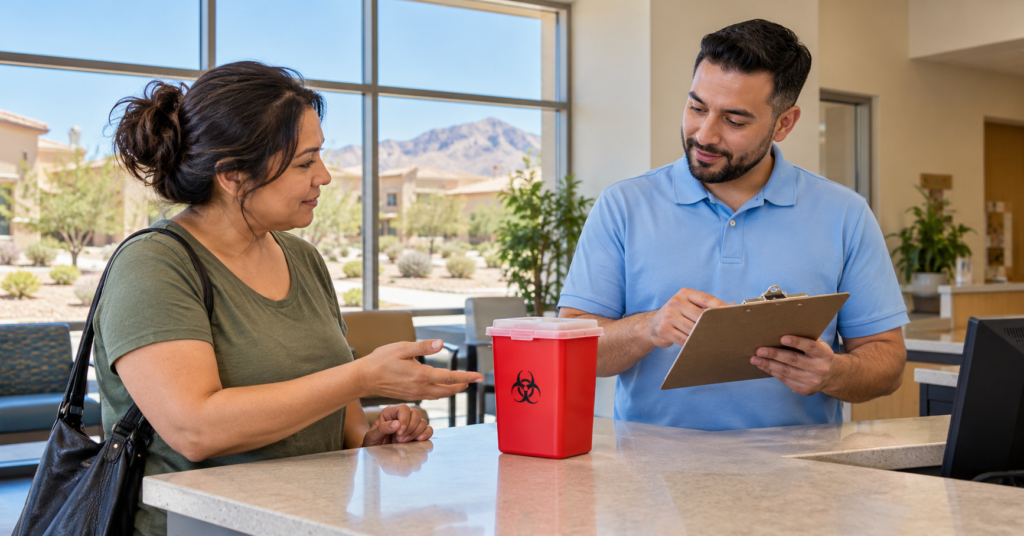
Contact the location before travelling with your container. Confirm that sharps collection is currently available and explain the container’s type, dimensions and contents.
The published local listing does not establish that every location accepts every container size. If yours is unusually large or you have several containers, obtain a specific answer before making the trip.
Confirm Container Requirements Before Filling One
The FDA recommends FDA-cleared sharps containers. These are rigid containers designed to reduce puncture and leakage risks, with a marked fill line and a suitable closure.
Before choosing a container for ongoing use, ask your intended collection program which sizes and types it accepts. A container that works well on your counter may not fit a particular collection opening.
If an FDA-cleared container is unavailable, FDA guidance describes certain heavy-duty plastic household containers as alternatives. They must have appropriate features, including leak resistance and a tight-fitting, puncture-resistant lid. However, confirm whether your chosen drop-off program accepts that alternative.
Avoid assuming that any plastic bottle is suitable. If your current container does not meet the receiving site’s requirements, request instructions without opening it or transferring its contents yourself.
Check Access Hours and Registration Separately
A location’s general opening hours may differ from the hours when its collection area is accessible. Some facilities house services inside a clinic or another part of the building.
Ask:
- Which entrance should you use?
- Is the collection point indoors?
- Are there lunch closures or appointment requirements?
- Must you speak with staff before depositing the container?
- Is identification or registration required for disposal?
Supply-vending registration is a separate issue. Impact Exchange publishes registration instructions for obtaining a card to collect supplies from its vending machines. Those instructions alone do not establish the requirements for returning a filled sharps container.
Explain whether you need disposal only or also want access to new supplies. That helps staff direct you to the correct process without unnecessary steps.
Close the Container Before It Becomes Overfilled
Place used sharps into an appropriate container immediately after use. Follow its marked fill line and closure instructions; FDA guidance generally advises arranging disposal when a container is about three-quarters full. Overfilling increases the risk of an accidental needle-stick injury.
Arrange collection early enough that you can stop using the container at its limit. Keep a replacement available if injections or testing will continue before your next disposal trip.
Do not push down the contents to create more space. Once the container is ready for disposal, secure its closure as directed and retain any required warning labels.
A jammed lid or protruding needle needs specific guidance. Contact the collection program or your healthcare provider before handling or transporting a damaged or overfilled container.
Keep the Container Secure During the Trip
Before leaving, check that the closure is secure and the container is intact. Keep it upright and supported so it cannot tip or roll around during travel. Store it out of reach of children and pets while awaiting disposal.
The FDA advises sealing and properly labelling sharps containers and keeping them away from children and animals. Loose sharps must not go into household trash, recycling bins or toilets.
At the destination, follow the instructions for the designated collection point. Ask staff for help if the opening is blocked, the receptacle appears full or your container will not fit.
Do not force the container inside or leave it beside a bin, doorway or reception desk. If the site cannot accept it, keep it secured while arranging another approved option.
Keep Medication Take-Back Separate From Sharps Collection
A pharmacy or police station advertising medicine disposal should not automatically be treated as a needle-disposal location. Southern Nevada Health District’s medication-disposal guidance addresses sharps through separate resources.
If you have both unused medicines and used injection equipment, identify the correct destination for each. Ask specifically about devices containing remaining medication because acceptance can depend on the item and program.
Read the collection receptacle’s instructions before depositing anything. A general “drug disposal” sign does not confirm that a sealed sharps container belongs there.
Consider a Mail-Back Program When Drop-Off Is Impractical
A sharps mail-back program may be useful when available collection hours, transportation or accepted container sizes make local drop-off difficult. The FDA identifies mail-back programs as a disposal option, usually for a fee, and emphasizes following their packaging and labelling instructions.
Before ordering, confirm which items the program accepts, the container capacity and whether the price includes return postage and disposal. Check whether you must use the container supplied with the kit.
Use the program’s authorized packaging and return procedure. Do not improvise by putting an ordinary filled sharps container into a mailing box.
For ongoing household use, choose an arrangement that fits how quickly your container fills. A dependable collection schedule or suitable mail-back kit can make disposal a routine part of managing supplies.
Note: Consult the Southern Nevada Health District’s needle-disposal location listing when planning a visit. Confirm accepted items, container requirements and access hours directly with the receiving location.