When searching for Las Vegas lost pets, start with the location where the animal disappeared and the shelter serving that area. Posting a photograph online can help, but you also need to check shelter records, follow up on possible matches and prepare the documents needed to bring your pet home.
The details matter. A listing may show an animal still in transit, a shelter may need additional ownership evidence, and holding rules have exceptions. Organize the search so these issues do not delay your response.
Identify the Shelter Serving the Area
Use the last confirmed location rather than automatically choosing the shelter nearest your home. This is especially important if your pet escaped during a visit, boarding stay or car journey.
Local guidance identifies these starting points:
| Area where the pet was found | Shelter to check |
|---|---|
| City of Las Vegas, North Las Vegas or unincorporated Clark County | The Animal Foundation, 655 North Mojave Road |
| Henderson | Henderson Animal Care and Control, 300 East Galleria Drive |
Nevada SPCA explains that it primarily accepts owner-surrendered animals and is not contracted to handle municipal stray-animal intake. Its name should not lead you to assume it receives every missing pet in the valley.
Give staff the nearest cross streets and any later sightings. If the pet disappeared near a jurisdiction boundary, ask which neighbouring agencies should also receive the report.
Check Shelter Listings and Community Reports
A pet being cared for by a resident may never appear in a shelter’s intake records.
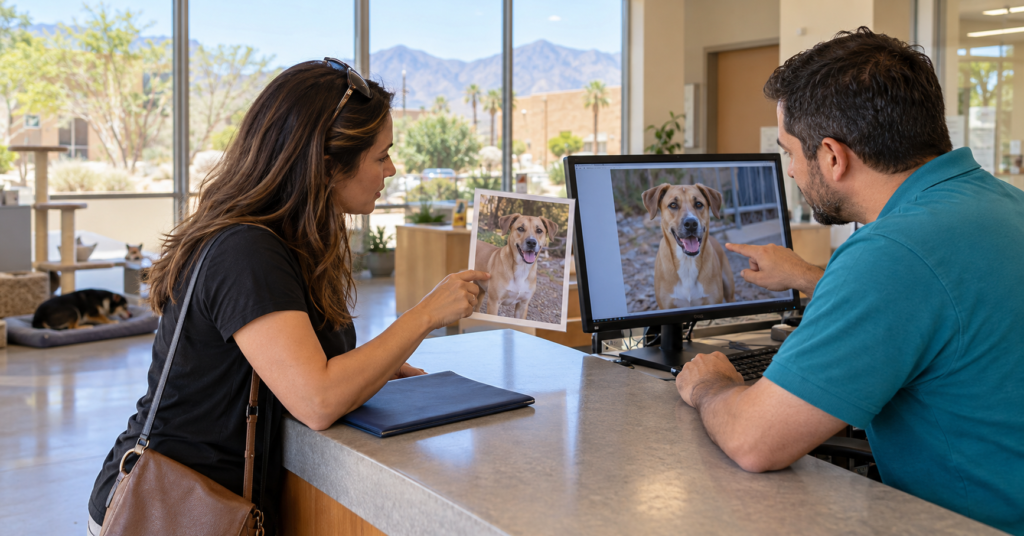
The Animal Foundation encourages people who find healthy, friendly pets to help reunite them within the community when possible. It also works with Petco Love Lost, a free database that allows owners and finders to upload photographs and search for potential matches.
Check both the shelter search and community found-pet reports. Use a recent, clear photograph showing the face and another showing the body, coat pattern and distinctive markings.
Include the disappearance date, approximate location and a reliable contact method. Keep a private record of where you submitted the information so you can update those reports later.
If someone is helping, divide the work. One person can monitor shelter records while another follows up on neighbourhood sightings. Keep confirmed information in a shared note so a promising lead does not get lost among repeated messages.
Search Broadly and Read the Location Field
Begin with broad search settings. Narrow filters can exclude a possible match when an animal’s recorded age, size or other details differ from your description.
The Animal Foundation’s search includes filters for animal type, gender, size, age and location. Location options include animals en route, in foster care and at offsite locations, as well as those at the shelter.
Review photographs and distinguishing features rather than relying only on a name or category. For example, a white chest patch, unusual tail shape or marking on one paw may help you explain why a listing deserves another look.
When you find a possible match, save:
- The animal identification number.
- A screenshot of the listing.
- The displayed location.
- The date and time you checked.
Contact staff with the identification number and ask how they can help verify the match. Confirm where the animal is physically located before travelling.
Ask About the Animal’s Actual Hold Status
Do not assume every animal receives the same reclaiming window.
The Animal Foundation describes a general 72-hour stray hold, subject to exceptions. Once the applicable hold ends, an animal may be considered for adoption.
Its detailed guidance states that stray cats without identification from the City of Las Vegas and Clark County are exempt from the 72-hour hold and may be evaluated for adoption upon intake.
For a possible match, ask staff to confirm the intake time, current status and next step for establishing ownership. Do not calculate a deadline from when you first noticed the listing.
An online message or voicemail should not be treated as confirmation that a claim has been accepted or a deadline extended. Ask whether staff have recorded your ownership claim and what remains outstanding.
Check the Microchip Registry Directly
If your pet is microchipped, contact the registry and verify the telephone number and email address attached to the chip. Ask whether it offers a way to flag the animal as missing.
Updating your veterinary clinic’s records does not necessarily update the separate microchip registration. The American Animal Hospital Association explains that registration is maintained through individual registries. Its lookup tool helps identify a registry, but does not itself update owner details.
Look for the chip number in adoption paperwork, previous registration emails or veterinary records. Give it directly to shelter staff when discussing a possible match.
If the record still names a rescue, breeder or former owner, ask the registry what evidence it needs to correct the information. Continue the shelter search while that issue is being resolved.
Prepare Ownership Evidence Before Visiting
Gather your records while checking listings so you are ready when a likely match appears.
The Animal Foundation asks reclaiming owners to bring a pet photograph, veterinary records, proof of rabies vaccination and a current breeder or fancier licence where applicable.
Choose photographs that clearly show identifying features. Several images taken at different times can be more useful than one heavily cropped or filtered picture.
Ask your veterinary clinic for copies of relevant records. Check that names and contact details are consistent across the paperwork. If an adoption document uses a previous pet name, be ready to explain the connection.
Where ownership documents are in another household member’s name, tell staff before arriving. Ask what authorization is needed if somebody else will collect the animal.
Keep readable digital copies available, and confirm whether the shelter also needs printed documents or identification.
Verify Unexpected Calls About Your Pet
A public missing-pet report can attract messages from people whose claims need checking.
The Federal Trade Commission warns that scammers may impersonate animal hospitals or law enforcement and claim a missing pet needs urgent treatment. Demands to pay only through gift cards, cryptocurrency, payment apps or wire-transfer services are warning signs.
If someone claims to represent a shelter or clinic, obtain their name and the animal’s reference number. Find the organization’s contact details independently and call to verify the story before sending money.
For a private finder, request a current photograph and compare details beyond the image in your public post. Arrange any handoff with personal safety in mind.
Confirm Release Requirements and Transport
Once ownership is established, ask what must happen before your pet can leave. Confirm the collection location, reclaiming hours, required paperwork and any treatment or administrative steps affecting release.
Request an explanation of applicable charges. The Animal Foundation says financial assistance may be available through reduced or waived reclaiming fees; ask staff directly if cost would prevent collection.
Bring suitable equipment for the journey, such as a secure cat carrier or a properly fitted dog harness and leash. Tell staff if your pet has medication needs, mobility limitations or handling concerns.
Before departure, collect any treatment records and ask about follow-up care. Once the animal is safely home, close the missing-pet reports and notify the people helping with the search so they can stop circulating outdated alerts.
Note: The Animal Foundation’s lost-pet guidance provides local search instructions, reclaiming requirements and information about holding exceptions.