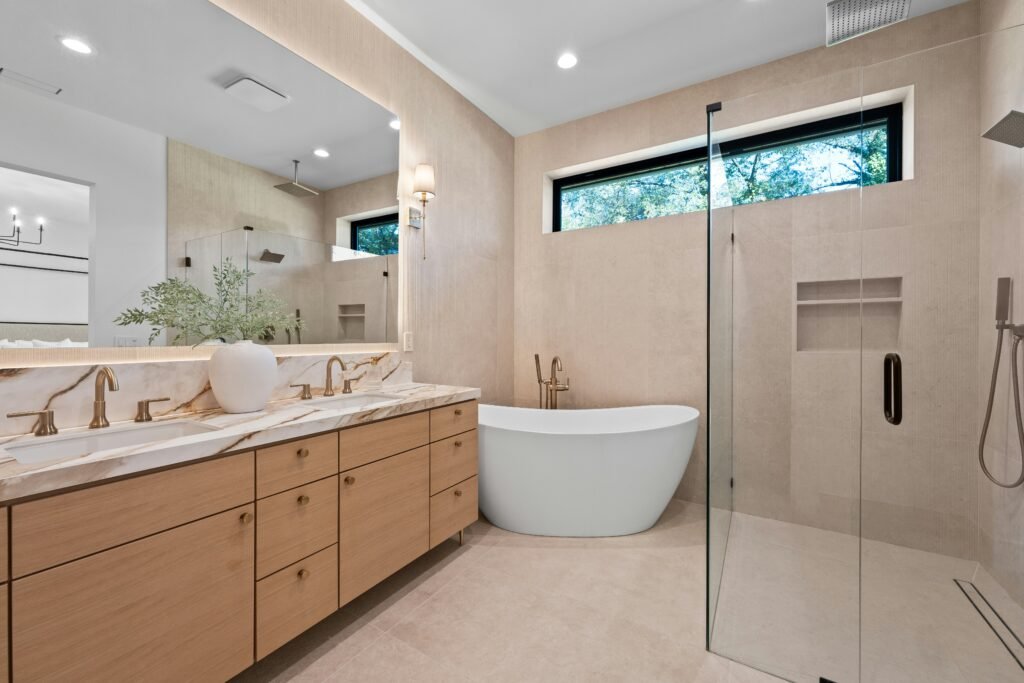
A bathroom faucet may appear to have strong water pressure during a home showing, yet the same fixture can slow noticeably when the landscape irrigation starts. This problem is easy to miss because buyers usually inspect homes during the day while irrigation controllers are programmed to run early in the morning.
Testing Las Vegas water pressure under different conditions can reveal problems involving irrigation zones, pressure regulators, aging pipes and competing household demand. The goal is not simply to obtain the highest possible reading. A home needs pressure that remains reasonably stable without becoming high enough to damage plumbing components.
Why One Quick Faucet Test Is Not Enough
Turning on a kitchen faucet confirms that water is available, but it does not show how the plumbing performs when several fixtures need water at the same time.
A home’s water pressure may appear normal when no other water is being used. The pressure or available flow could drop when:
- A sprinkler zone starts
- A drip-irrigation valve opens
- Someone takes a shower
- A toilet refills
- The washing machine fills
- An exterior hose is running
Buyers should therefore test the home during ordinary competing demand. Irrigation is especially useful because some zones require enough water to expose restrictions that remain hidden during a simple faucet test.
Las Vegas Water Pressure Varies by Location
The Las Vegas Valley Water District explains that pressure in its distribution system varies according to a property’s elevation relative to the reservoir supplying the area. Peak demand and routine system operations can also cause fluctuations.
According to the district, operating pressure within its system generally ranges from approximately 30 to 100 pounds per square inch. This broad range does not mean that every home should receive the same pressure or that every pressure within it is automatically suitable for the home’s plumbing.
The district cannot adjust pressure for one individual property. Private plumbing components may be needed to manage the pressure entering a house. Buyers can review the district’s water-pressure information before evaluating a property.
Pressure and Flow Are Related but Different
Water pressure is the force moving water through the plumbing. Flow is the volume of water delivered over a period of time.
A home can have acceptable static pressure and still provide disappointing flow because of:
- Narrow or deteriorated pipes
- Mineral accumulation
- A partially closed valve
- A clogged aerator
- A failing pressure regulator
- An undersized service line
- A leak
- Excessive simultaneous demand
This distinction matters during an inspection. A pressure gauge provides useful information, but the occupants’ experience at showers and faucets also needs to be evaluated.
Test the Home With Irrigation Off First
Begin by establishing how the plumbing performs when irrigation is not operating. Confirm that water-using appliances are idle and that nobody is using a shower, faucet or washing machine.
Run fixtures individually and observe:
- How quickly full flow begins
- Whether the stream pulses or fluctuates
- Whether hot and cold sides perform similarly
- How long an upstairs fixture takes to respond
- Whether toilets refill normally
- Whether pipes make unusual noises
If permitted, a basic water-pressure gauge can be attached to a compatible exterior hose bib. Follow the gauge manufacturer’s instructions and make sure the connection does not leak.
Record the reading rather than relying on memory. Also note the approximate time because neighborhood demand can change during the day.
A home inspector or licensed plumber can perform a more complete evaluation when a buyer is not comfortable conducting the test.
Repeat the Test While Each Irrigation Zone Runs
Ask the seller or their representative for permission to operate the irrigation controller. Do not alter the permanent watering schedule or open valve boxes without authorization.
Run one zone at a time and observe both the landscaping and the indoor fixtures. Test a shower or faucet while the zone remains active.
Watch for:
- A major reduction in indoor flow
- A sprinkler pattern that becomes weak or uneven
- Drip emitters that stop delivering water
- Pipes that vibrate or produce hammering sounds
- Water appearing around irrigation valves
- Sprinkler heads that fail to rise completely
- Pressure that does not recover when the zone stops
Repeat the process for every zone because one may create a problem while the others operate normally. A zone with too many sprinkler heads, a damaged pipe or an incorrect pressure requirement could behave differently from the rest of the system.
What the Sprinkler Pattern Can Reveal
The irrigation system itself provides clues about pressure.
The Las Vegas Valley Water District notes that misting and excessive drift may indicate high irrigation pressure. Weak, short spray patterns and reduced coverage can indicate low pressure.
A sprinkler throwing a fine mist is not necessarily performing better. Small airborne droplets can drift away or evaporate more readily in dry and windy conditions. At the opposite extreme, sprinkler heads that barely cover the intended area can leave dry patches and encourage longer watering cycles.
Review the district’s landscape watering guidance for additional signs of inefficient system operation.
One underperforming sprinkler may simply be clogged or damaged. An entire zone performing poorly suggests a broader problem requiring further evaluation.
Look for Irrigation Leaks During the Test
Pressure loss may be caused by water escaping from a damaged irrigation component.
Walk the property while each zone operates. Look for water pooling around valve boxes, bubbling beneath grass, unusually wet soil, broken sprinkler heads and streams running toward the street.
Drip systems can be harder to inspect because much of the tubing may be covered by rock or soil. Listen for spraying water and look for one area becoming saturated much faster than the surrounding landscape.
The Southern Nevada Water Authority recommends checking irrigation components for cracks, breaks and pooled water. Its leak-detection guidance also explains how meter movement can help property owners investigate possible leaks.
Buyers should not open or dismantle unfamiliar backflow, pressure-regulation or irrigation equipment during a showing. Ask the inspector or an appropriate professional to evaluate suspicious conditions.
Consider the Irrigation System’s Design
A pressure drop does not always originate with the municipal supply. The irrigation system may place more demand on the property’s plumbing than its design can support.
Possible design issues include:
- Too many sprinkler heads assigned to one zone
- Mixed sprinkler and drip components on the same zone
- Missing or unsuitable pressure regulation
- Improperly sized irrigation lines
- Alterations added after the original installation
- A controller activating overlapping zones
- Sprinkler heads with incompatible flow requirements
The Southern Nevada Water Authority notes that drip systems require appropriate pressure regulation, with many systems designed to operate within a much lower pressure range than the home’s main supply.
An irrigation professional can determine whether zones need to be divided, repaired or reconfigured. Buyers should obtain an evaluation before assuming that a controller adjustment will correct the problem.
Check the Pressure-Regulating Valve
Some Las Vegas homes need a pressure-regulating valve to reduce high incoming pressure to a level appropriate for the private plumbing system. A failing or incorrectly adjusted regulator may cause pressure that is too low, too high or inconsistent.
Possible warning signs include:
- Pressure changing sharply during ordinary use
- Fixtures surging when first opened
- Repeated leaks at supply lines
- Banging or vibrating pipes
- Water pressure differing dramatically throughout the day
- Indoor pressure falling heavily during irrigation
The presence of a regulator does not prove it works correctly. Its condition, adjustment and installation should be checked by a qualified plumber.
Do not adjust the regulator solely to obtain stronger shower flow. Increasing pressure without understanding the plumbing system could contribute to leaks or premature fixture failure.
Compare Different Times of Day
Neighborhood water demand can influence what a buyer observes. Irrigation and household use may be concentrated during permitted watering periods, particularly in warmer months.
If water pressure is a major concern, consider checking the property at more than one time. An afternoon showing may not reproduce the conditions present when surrounding homes run their irrigation.
Southern Nevada uses seasonal watering restrictions, and assigned watering days vary by address. Buyers can review the property’s current schedule through the Las Vegas Valley Water District watering-day tool.
Testing must still comply with applicable watering restrictions. Do not run irrigation outside permitted periods merely to complete an informal inspection. A licensed inspector may be able to evaluate the system through an authorized process or arrange an appropriate return visit.
Test More Than One Indoor Fixture
A pressure problem may affect the entire home or only one fixture.
While irrigation operates, compare:
- A first-floor and second-floor faucet
- The kitchen and primary bathroom
- Hot and cold water
- A shower and nearby sink
- Fixtures close to and far from the main supply entry
If only one faucet performs poorly, its aerator or supply valve may be restricted. If every fixture weakens simultaneously, the cause may be closer to the main supply, regulator or irrigation connection.
Hot-water performance can also differ from cold-water performance. A restriction involving the water heater or hot-water piping may not be apparent when testing only cold faucets.
Ask for Water and Irrigation Records
Sellers may have information that helps explain inconsistent pressure. Buyers can ask whether the property has experienced:
- Plumbing leaks
- Irrigation-line repairs
- Pressure-regulator replacement
- Water-main work nearby
- Unusually high water bills
- Repeated sprinkler failures
- Water-softener or filtration problems
- Pipe replacement or repiping
Request invoices or reports when available. A recently replaced regulator or repaired service line may be relevant, but buyers should still confirm present performance.
An unusually high bill does not identify the cause by itself. It may result from irrigation programming, leaks, pool refilling or increased household use.
Do Not Ignore Excessively High Pressure
Buyers often focus on weak showers, but pressure that is too high can also be concerning. It may contribute to premature wear on valves, appliance connections, toilet components and flexible supply lines.
Signs may include forceful faucet flow, misting sprinklers, repeated leaks or banging pipes. A brief gauge reading should be interpreted in the context of the home’s system and local requirements.
A qualified plumber can conduct static and dynamic pressure tests. Static pressure is measured when water is not flowing, while dynamic pressure reflects conditions during active use. Comparing the two can help identify a large drop under demand.
Make the Test Part of the Inspection
Water pressure should be evaluated during the inspection period rather than after the purchase closes. Tell the home inspector about any concern noticed during the showing and specifically request observation while irrigation is active when conditions and rules permit.
Additional plumbing or irrigation evaluation may be appropriate if:
- Pressure drops substantially under demand
- The regulator appears old or damaged
- Multiple zones perform poorly
- Leaks or saturated areas are present
- The home has undergone plumbing alterations
- The seller reports recurring pressure problems
- Gauge readings or fixture behavior are inconsistent
The purpose of further inspection is to determine the likely cause, repair scope and potential cost. It also gives the buyer information for deciding whether to proceed or address the issue through the purchase process.
A Practical Las Vegas Home-Buyer Check
A useful water-pressure evaluation compares the property under quiet and active conditions. Test fixtures with irrigation off, repeat the observations while individual zones operate and record what changes.
Look beyond the strength of one faucet. Watch sprinkler coverage, inspect for leaks, compare different floors and ask whether pressure varies at other times.
Checking Las Vegas water pressure while irrigation is running cannot identify every hidden plumbing problem. It can, however, expose performance issues that an ordinary daytime walkthrough may never reveal.
Note: This article provides general home-buying information and is not a substitute for a professional property, plumbing or irrigation inspection. Obtain permission before operating equipment and follow current Southern Nevada watering restrictions.