A failed smog test can leave a Las Vegas driver facing repair costs and an approaching registration deadline. Before authorizing work, understand the test result, check available coverage, and find out which repairs could count toward a waiver if the vehicle still cannot pass.
Handling Las Vegas failed smog tests involves several separate decisions. The following checks focus on gasoline-powered passenger vehicles in Clark County. Diesel vehicles follow different repair-cost and waiver requirements.
Read the Inspection Report Before Booking Repairs
Keep the complete Vehicle Inspection Report and check that its vehicle identification number matches your car. Ask the station to explain the recorded reason for failure.
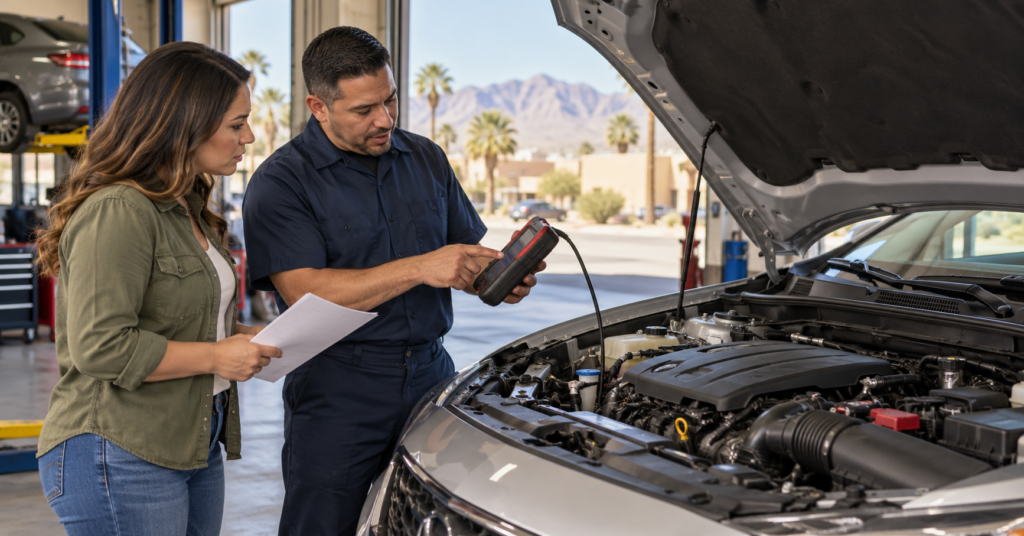
For newer vehicles, the inspection uses information from the onboard diagnostic system. Older vehicles may undergo a tailpipe test. The repair shop needs the actual findings to investigate the problem.
Also check whether the result says “Failed” or “Rejected.” Nevada DMV explains that a rejection can mean the vehicle’s diagnostic monitors have not completed their checks, particularly after a battery disconnection or cleared fault codes. That result calls for a readiness review before assuming an expensive component needs replacement.
If the check-engine light is flashing, stop driving and arrange professional assistance. DMV identifies a flashing light as a serious malfunction.
Preserve the First Failed Test and Repair Timeline
The first failed emissions test establishes the starting point for potential waiver consideration. Nevada DMV states that money spent on repairs before that test does not count toward the waiver requirement.
Save a readable copy of the report before leaving it with a repair shop. Keep a simple record of subsequent diagnostic visits, authorized work, and retests.
Give the technician the original failure report when requesting an estimate. Ask which findings the proposed work addresses and whether additional diagnosis is needed before replacing parts.
This creates a useful paper trail if the car continues to fail or a later technician needs to understand what has already been attempted.
Check Emissions Warranty Coverage
Contact a manufacturer-authorized dealer before paying for a major emissions component.
EPA explains that specified components, including catalytic converters, emissions control computers, and onboard diagnostic devices, can have federal warranty coverage for eight years or 80,000 miles, whichever comes first. Eligibility depends on the vehicle, failure, and applicable warranty conditions. Coverage may still apply when the vehicle was purchased used.
Provide the VIN, current mileage, inspection report, and available diagnosis. Ask whether the suspected repair falls under an emissions warranty, recall, or other manufacturer coverage.
Obtain that answer before approving replacement elsewhere. If coverage is denied, request the reason in writing so you can evaluate the proposed bill with accurate information.
Choose the Appropriate Repair Station
If you may need a Clark County gasoline-vehicle waiver, confirm that the shop is a licensed 2G Authorized Station before repairs begin. DMV says work performed elsewhere will not establish waiver eligibility, regardless of the amount spent.
Use the station search linked from the Nevada DMV emissions program to verify the business. Ask specifically about its authorization to perform emissions repairs.
Request a written estimate showing diagnostic charges, proposed parts, labor, and any retesting fee. Nevada’s automotive repair customer bill of rights includes the right to a written estimate for repairs exceeding $50.
Agree on how the shop will obtain permission for additional work. Keep emissions repairs separately identified if you also authorize unrelated maintenance during the visit.
Apply for Repair Assistance Before Work Begins
Drivers facing an unaffordable estimate should investigate Smog Free Clark County before authorizing repairs.
The county-funded program offers eligible applicants up to $975 toward emissions-related repairs. Its current guidance requires an approved participating facility and states that repairs completed before program approval will not be reimbursed. Funding availability and eligibility conditions also affect approval.
Start with Clark County’s repair-assistance information and follow the application instructions.
After receiving a voucher, confirm the participating shop, expiration date, covered work, and your responsibility for any remaining balance. A shop’s general 2G authorization and its participation in the assistance program are separate checks.
Understand Which Spending Counts Toward a Waiver
For a Clark County gasoline-vehicle waiver, DMV lists a minimum of $450 in qualifying repairs. Eligible spending must relate to the emissions deficiency, and emissions testing charges do not count toward that minimum. Certain parts and work are also excluded under DMV’s rules.
Ask the repair station to identify the amount it expects to qualify. Contact the DMV Emissions Lab if the estimate includes an uncertain item, especially a major emissions component.
Keep an itemized paid invoice showing the vehicle, repair date, parts, labor, and work performed. A card receipt showing only the total provides little explanation of the repair.
The spending threshold is one eligibility condition. Reaching it does not automatically entitle a vehicle to a waiver.
Confirm Readiness Before Paying for Another Test
After repairs, ask the technician whether the diagnostic monitors are ready for inspection. A cleared warning light does not establish that the computer has completed its checks.
Battery disconnection and code clearing can reset readiness information. DMV advises that the vehicle may need driving under varying conditions before retesting. Follow the technician’s or manufacturer’s guidance for your particular vehicle rather than relying on a fixed mileage target.
For a vehicle rejected as “not ready,” DMV says its emissions lab can check readiness at no charge. Confirm current service arrangements before visiting.
Ask the original station about its retest price and any applicable return period. Keep the new report with the first one.
Address Registration Expiration Separately
Arrange legal transportation while repairs and retesting are underway. If registration has expired, check whether you qualify for a DMV movement permit before driving on public roads.
DMV currently offers eligible Nevada-registered vehicles a ten-day online permit for $1 through MyDMV. Conditions apply, including ownership and registration-status requirements. Online permits are valid within Nevada, and liability insurance remains necessary.
Review the movement permit requirements and the dates printed on the permit. Build repair appointments and retesting into that period, and ask DMV about alternatives if the vehicle does not qualify online.
Request DMV Review if the Vehicle Still Fails
If qualifying repairs have been completed and the vehicle fails again, bring the vehicle, both failed inspection reports, and repair receipts to the DMV Emissions Lab for waiver review.
DMV examines the vehicle and documentation before deciding eligibility. Its guidance excludes vehicles eligible for warranty coverage, smoking vehicles, and vehicles with tampered emissions equipment. An approved waiver carries no issuance charge and is valid for one year; the vehicle must be repaired before the next registration year.
After receiving a passing test or approved waiver, complete the registration renewal and retain its confirmation. Store the diagnosis and repair records for the next service visit.
Note: These checks address gasoline-powered vehicles in Clark County. Confirm current requirements for your vehicle with the Nevada DMV Emissions Lab before relying on waiver eligibility or approving substantial repairs.