
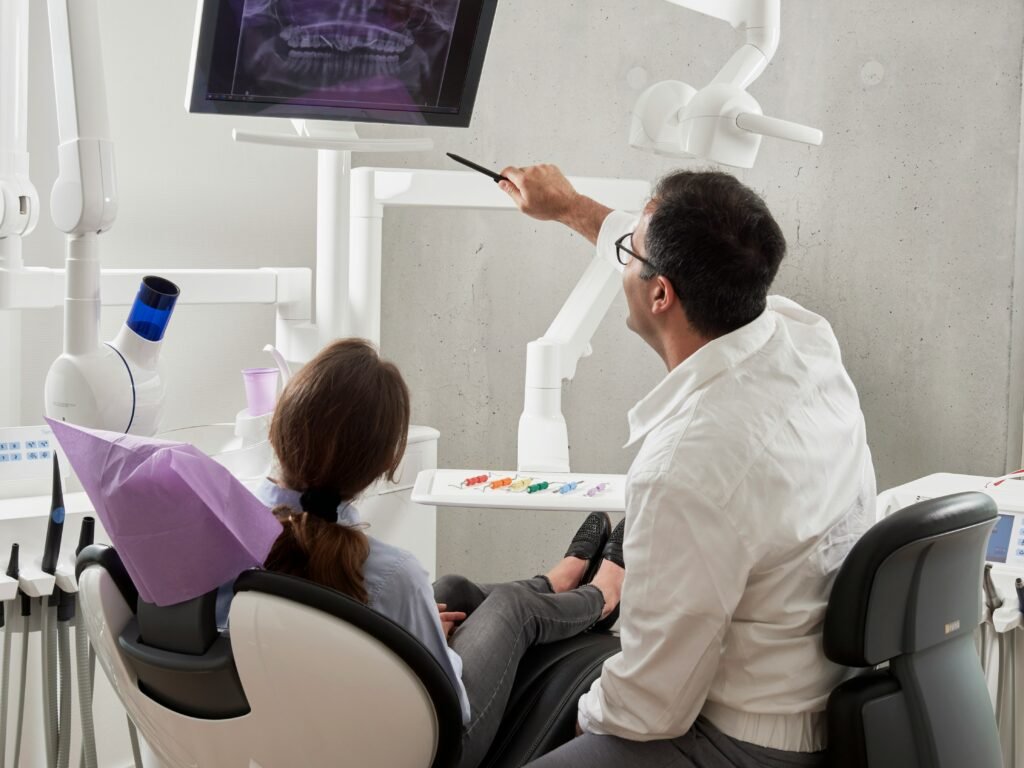
A Las Vegas dental implant consultation should help you understand your options, the proposed treatment, and the full financial commitment. Before choosing an appointment based on an advertised price, establish what the visit includes and who will assess you.
These questions will help you compare treatment plans and fit appointments around work, transportation, and ongoing dental care.
What Does Your Las Vegas Dental Implant Consultation Include?
When booking, ask whether the consultation includes an examination by the treating dentist, a review of your medical history, imaging, and a written estimate. If the appointment is advertised as free, confirm which services carry separate charges.
Bring your medication list, relevant health information, insurance details, and any recent dental records the office requests. Mention previous difficulties with dental treatment or anxiety so the team can discuss appropriate support. The American Dental Association’s guidance on choosing a dentist recommends using a consultation to discuss your concerns and the practice’s arrangements.
Also clarify whether the first visit is for assessment only or could involve treatment. Ask how much time you will have to review the findings before making a decision.
Could Tooth-Saving Treatment or Other Replacement Options Work?
If the proposal involves removing existing teeth, ask why each extraction is recommended and whether treatment could preserve the tooth. The American Academy of Periodontology emphasizes preserving natural teeth whenever possible and discussing the full range of options before extraction.
For missing teeth, ask how the proposed implants compare with a conventional bridge or removable denture in your circumstances. Discuss comfort, cleaning, expected maintenance, and total cost.
Request a clear explanation of the disadvantages as well as the benefits. If you remain uncertain about an extensive plan, obtain your records and seek another clinical opinion before committing.
How Do Gum Health and Bone Grafting Affect Implant Candidacy?
Healthy gum tissues and adequate supporting bone are important considerations in implant planning. Some patients may need additional treatment to prepare the proposed implant site, according to the American Academy of Periodontology’s implant guidance.
Ask the clinician to explain your examination findings. If bone grafting or a sinus augmentation is proposed, establish why it is needed, what alternatives exist, and how it changes the sequence and cost.
Your medical history also matters. Discuss health conditions, medications, and tobacco use openly; the FDA notes that overall health and smoking can affect implant healing. Ask whether coordination with your physician is necessary. Any medication changes should come from the clinicians managing your care.
Why Is 3D Dental Imaging Being Recommended?
Cone-beam computed tomography, commonly called CBCT, produces three-dimensional images that can support dental implant planning. The FDA advises using dental CBCT when clinically necessary, with attention to existing images and suitable alternatives.
Ask what the scan will help the dentist assess and whether imaging from your previous practice would be useful. Existing images may help, but the treating clinician must decide whether they provide enough information.
Confirm the imaging fee and whether it is included in the consultation. If you later request another opinion, ask how the images and report can be transferred.
What Exactly Is Included in the Implant Treatment Plan?
The implant itself is the component placed in the jaw. An abutment connects it to the replacement tooth or teeth. The restoration may be a crown, bridge, or denture. These are distinct components of treatment, as the FDA’s dental implant overview explains.
Have the dentist show you what is proposed for your mouth. For several missing teeth, clarify the number of implants and how many teeth the restoration will replace.
For implant-supported dentures or a full-arch restoration, ask whether the teeth are removable by you or fixed in place for professional removal when needed. Discuss cleaning access, materials, and repair arrangements before choosing a design.
Do “Same-Day Teeth” Mean Temporary or Final Teeth?
The ADA describes different implant treatment timelines: some patients receive replacement teeth at placement, while others need a healing period before attachment.
Ask what “same-day” means in your specific proposal. Will you receive a temporary restoration or the final one? What eating restrictions apply? When would the final teeth be fitted, and what findings could delay that stage?
Request an approximate schedule showing surgery, healing reviews, and restorative appointments.
Who Will Place the Implants and Fit the Replacement Teeth?
Ask for the names of the clinicians responsible for surgery, the restoration, and continuing care. Find out whether you will attend one practice or several offices, and who coordinates the overall plan.
You can check the treating dentist through the Nevada State Board of Dental Examiners’ license lookup, which provides licensure information and certain disciplinary records. A license check is one part of your assessment; it does not establish that a particular treatment is right for you.
Discuss the clinician’s training and experience with cases similar to yours. Ask who handles concerns between stages, particularly if the surgeon and restorative dentist work separately.
How Should You Compare Dental Implant Costs in Las Vegas?
Request a written, itemized estimate for the complete proposed course of treatment. Comparing a single advertised implant price with a quote covering surgery and final teeth can leave significant differences hidden.
Use these items to check the scope of each proposal:
| Cost item | What to clarify |
| Examination and imaging | Which assessments are included? |
| Preparatory treatment | Are extractions, gum treatment, or bone grafting separate? |
| Implant and abutment | Are both components included? |
| Temporary and final teeth | Which restorations and materials are quoted? |
| Anesthesia or sedation | Is there a separate fee or provider? |
| Reviews and adjustments | Which visits are included, and for how long? |
| Complications and repairs | What could lead to additional charges? |
Ask when payments become due, how long the estimate remains valid, and how changes to the plan would be approved. Before paying a deposit, read the cancellation and refund terms.
What Will Dental Insurance and Financing Actually Cover?
Ask your insurer about coverage for each proposed procedure, network status, remaining benefits, and applicable exclusions. Request a written benefits estimate where available. The ADA explains that a predetermination is generally an estimate rather than a payment guarantee; eligibility or remaining benefits can change before treatment.
If financing is offered, compare the total amount repayable, interest rate, fees, and repayment period. The Consumer Financial Protection Bureau warns that deferred-interest arrangements can trigger interest dating back to the original purchase if their conditions are not met.
Ask for the financing agreement to review separately from the clinical treatment plan.
How Will Sedation Dentistry and Recovery Affect Your Schedule?
Ask which anesthesia or sedation approach is proposed, who will administer it, and what preparation and discharge instructions apply. Clarify whether you need someone to accompany you, drive you home, or stay with you afterward. AAOMS advises planning assistance after oral surgery because anesthesia can affect alertness and driving.
Discuss your actual duties when asking about time away from work, including driving, lifting, speaking, or operating equipment. Request individualized guidance rather than assuming a consultation and a surgical visit require the same arrangements.
For overnight workers, our Las Vegas night-shift planning guide can help with broader sleep and transportation planning. If you travel from outside the valley, our guide to finding medical specialists while living in rural Nevada covers general travel and record-sharing considerations.
What Does Dental Implant Aftercare Involve?
Before proceeding, ask the dentist to explain the risks relevant to your case, including infection, implant failure, and possible injury to nearby structures. The FDA also recommends ongoing cleaning and dental follow-up, and prompt contact with a dental professional if an implant becomes loose or painful.
Discuss long-term implant maintenance, including how to clean the planned restoration, who provides continuing care, and what future appointments may cost. Obtain written instructions identifying expected recovery symptoms, warning signs, and the appropriate contact for urgent concerns outside office hours.
Keep a copy of the treatment plan and request the implant brand and model for your records. If a warranty is offered, read what it covers, its exclusions, and any maintenance conditions.
Note: Information checked in September 2026. This article provides general information and does not replace an individual assessment by a licensed dental professional. Treatment suitability, recovery, fees, insurance coverage, and financing terms vary; confirm the details with your care team, insurer, and lender before proceeding.