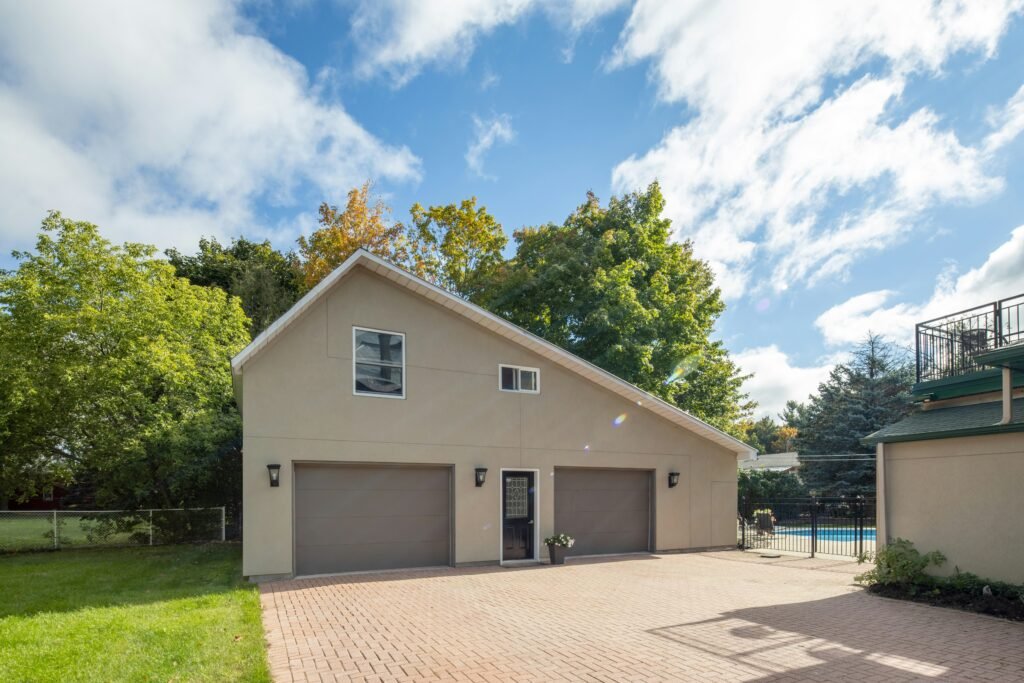
A Las Vegas garage conversion can make a home appear larger without the price of a conventional addition. The finished space might function as a bedroom, office, rental area or family room. However, fresh flooring and painted drywall do not prove that the conversion was approved, inspected or included in the home’s legally recognized living area.
Before buying, investigate the permit history, construction quality and official square footage. An unapproved conversion can affect financing, insurance and resale—and may leave the new owner responsible for correcting work completed years earlier.
Why Converted Garages Require Additional Review
A garage was originally designed for vehicles and storage, not necessarily for continuous occupancy. Converting it properly may require changes to insulation, ventilation, electrical wiring, fire protection and emergency access.
Problems are more likely when the work was completed informally. Warning signs can include:
- A floor that slopes toward the former garage door
- Portable air conditioners instead of permanent cooling
- Extension cords or surface-mounted wiring
- Very few electrical outlets
- No visible heating or cooling supply
- A low or unusually patched ceiling
- Windows too small to provide emergency escape
- Plumbing fixtures built on a raised platform
- A wall covering the garage opening without matching exterior finishes
- A bedroom that can be reached only through another bedroom
These conditions do not automatically prove the conversion is illegal. They indicate that the buyer should request records and arrange a closer inspection.
Confirm Which Government Has Jurisdiction
A Las Vegas mailing address does not always mean that a property is located within the City of Las Vegas. Some addresses are in unincorporated Clark County, while others may fall within Henderson or North Las Vegas.
Permit searches must be conducted through the authority responsible for that particular property. Buyers can begin with the City of Las Vegas building permit information or the Clark County Building Department.
Do not rely only on a seller’s statement that the conversion was “approved by the city.” Ask for the permit number and determine which agency issued it.
How to Verify a Las Vegas Garage Conversion
A permit record is more useful than a verbal explanation, but finding a permit is only the first step. The record should show what work was authorized and whether the required inspections were completed.
Look for documentation covering the relevant portions of the project, which may include:
- Conversion of the garage into habitable space
- Electrical circuits and outlets
- Plumbing installation
- Heating, ventilation and air-conditioning work
- Structural modifications
- New exterior walls, doors or windows
Properties within the appropriate jurisdiction may also be researched through the Clark County online building permit search.
Permit records can be incomplete for older work, so the absence of an online result should lead to further questions rather than an immediate conclusion. The buyer or agent can contact the responsible building department and request available records.
A Permit Is Not the Same as Final Approval
An owner may have obtained a permit but never completed the inspection process. A record marked as expired, withdrawn or still open does not provide the same assurance as a completed permit with final approval.
Ask the building department or a qualified local professional to explain unfamiliar status terms. The important question is whether the finished space was inspected and accepted for its current use.
Also compare the permit description with what exists today. A permit for adding electrical outlets would not necessarily authorize changing an entire garage into a bedroom.
Compare Advertised and Recognized Square Footage
A converted garage may be included in a listing’s advertised square footage even when public records continue to describe the property at its original size.
For example, a house may be promoted as having 1,900 square feet while the assessor or prior appraisal identifies only 1,500 square feet of living area. The missing 400 square feet could represent the former garage.
Ask for an explanation of every meaningful difference between:
- The listing
- County property information
- Previous appraisals
- Building plans and permits
- The current physical layout
A buyer should not assume that finished space will automatically receive the same value per square foot as the original house. Appraisers may treat it differently based on permits, construction quality, ceiling height, access and conformity with nearby homes.
Determine Whether It Can Legally Function as a Bedroom
A seller may describe the converted area as an additional bedroom, but its appearance does not determine whether it qualifies as one.
A professional should evaluate matters such as emergency escape, ventilation, permanent heating and cooling, smoke and carbon-monoxide alarms, ceiling height and access. The applicable requirements depend on the property, jurisdiction, age of the work and intended use.
Pay particular attention when the converted room has no exterior window or door. A space that cannot satisfy applicable life-safety requirements may be unsuitable for sleeping, even if it has a closet and a bed.
Examine Electrical, Plumbing and Cooling Work
The most expensive defects may be hidden behind recently installed walls.
A home inspector should examine accessible components and identify when a licensed electrician, plumber or HVAC contractor is needed. Potential concerns include overloaded circuits, improper connections, inadequate drainage and cooling equipment that was not designed for the additional load.
Las Vegas summers place substantial demand on residential cooling systems. If the conversion uses the home’s main air conditioner, determine whether the equipment and ductwork were evaluated for the added space. A room that remains uncomfortable during a mild showing may become difficult and expensive to cool in July.
Buyers comparing the property’s cooling performance may also find our guide to experiencing a Las Vegas summer before buying a home helpful.
Inspect the Floor and Former Garage Opening
Garage floors often sit at a different level from the main living area and may slope toward the vehicle entrance. Some conversions hide that slope beneath framing or a raised subfloor.
An inspector should check for:
- Moisture beneath finished flooring
- Cracks or settlement
- Unsafe steps between rooms
- Insufficient clearance above a raised floor
- Pest entry points around the former garage door
- Exterior drainage directed toward the converted wall
The former garage opening also deserves attention. A properly constructed wall should manage weather exposure and integrate with the building rather than simply conceal the old door.
Consider Fire Separation and Attached-Garage Changes
An attached garage commonly includes construction features intended to separate vehicle-related hazards from the living area. A conversion can alter walls, doors and ceilings that were part of that protective design.
This issue becomes especially important if only part of the garage was converted and vehicles are still parked in the remaining portion. Have a qualified professional assess whether the separation between the occupied room and active garage is appropriate.
Account for Lost Parking and Storage
The conversion’s value should be considered alongside what the property lost. Removing a two-car garage may leave the home with limited covered parking and less storage.
That tradeoff can matter in Las Vegas because vehicles parked outside face intense sunlight, heat and occasional severe weather. Some buyers also place a strong premium on enclosed parking, workshop space or secure storage.
Check whether the driveway can legally and practically accommodate the household’s vehicles. Street-parking restrictions, narrow driveways and homeowners association rules can make the loss of a garage more significant.
Review HOA and Community Restrictions
Building approval and HOA approval are separate matters. A government-issued permit does not establish that an exterior modification complied with private community rules.
Request any architectural approval associated with the conversion. If no documentation exists, review the governing documents and ask the appropriate HOA representative about the process for confirming compliance.
Unapproved exterior changes can become a dispute after ownership transfers. Obtain important answers in writing rather than depending on an informal conversation.
Las Vegas Garage Conversion Appraisal Risks
A lender’s appraiser may exclude the converted area from the home’s primary living area or assign it less value than the seller expects. If the appraisal comes in below the agreed price, the buyer may need to renegotiate, increase the down payment or cancel according to the contract’s terms.
Problems are more likely when:
- Public records do not match the listing
- No permits can be located
- The workmanship is noticeably inferior
- The room lacks permanent cooling
- Access is awkward
- The conversion removed all enclosed parking
- The property has an unusual layout compared with nearby homes
Ask the lender early whether documentation for the conversion could be required. Waiting until the end of escrow can leave little time to investigate an appraisal concern.
Discuss the Conversion With the Insurer
Insurance treatment can vary by property and carrier. Before the inspection and financing deadlines expire, describe the conversion accurately to the insurance representative.
Ask whether the insurer needs permit records, photographs or confirmation of the home’s square footage. If electrical, plumbing or structural work cannot be documented, determine whether it could affect eligibility, coverage conditions or the cost of the policy.
Do not describe the property using only the original public-record configuration if the current house has a materially different layout.
Review the Seller’s Documentation Carefully
Request copies of plans, permits, inspection approvals, contractor invoices, warranties and HOA correspondence. If the seller did not complete the conversion, ask what information was received from the previous owner.
Written disclosures should be compared with the permit record and physical condition of the house. Conflicting information deserves investigation before closing.
This review is especially important in an older property where other concealed systems may also need attention. Our guide to cast-iron sewer lines in Las Vegas homes explains another issue that can require specialized inspection.
Can an Unpermitted Conversion Be Legalized?
Possibly, but buyers should never assume approval will be simple or automatic.
The City of Las Vegas describes a year-round residential building amnesty program for owners who voluntarily disclose certain unpermitted or non-code-compliant work. Applicable plan-review and permit fees may still be required, and the work must go through the necessary review process.
Depending on the conversion, legalization could require plans, additional inspections, opening walls or ceilings, upgrading electrical work, improving emergency access or removing parts that cannot be approved. A different jurisdiction may follow a different process.
Before purchasing, obtain guidance directly from the responsible building department and estimates from appropriately licensed professionals. The seller’s estimate of the cost is not a substitute for this research.
Price Both Possible Outcomes
When approval remains uncertain, calculate two separate scenarios:
- The cost of bringing the converted room into compliance.
- The cost of restoring the area to a functional garage.
Restoration may involve more than installing a garage door. Electrical work, floor transitions, exterior finishes, structural openings and driveway access may all require attention.
If the purchase price depends heavily on the extra room, the buyer should understand what the property would be worth without that space.
Protect the Purchase Contract
Discuss appropriate protections with the buyer’s real estate agent and, when necessary, a Nevada real estate attorney. Depending on the transaction, these may include inspection, appraisal, financing, document-review or permit-verification contingencies.
Possible negotiation outcomes include:
- Requiring the seller to obtain final approval before closing
- Reducing the price to reflect correction costs
- Providing a properly structured credit where permitted
- Excluding the converted area from the buyer’s valuation
- Canceling the purchase under an applicable contingency
Do not allow a promise to “handle the permit later” to remain vague. The responsible party, required result, deadline and consequences should be clearly documented.
Questions to Answer Before Closing
A buyer should be able to answer these questions before accepting the conversion as part of the home’s value:
- Which agency has jurisdiction over the property?
- What work was authorized by the permit?
- Were all required inspections completed?
- Does official square footage include the conversion?
- Can the room legally be used for its advertised purpose?
- Are the electrical, plumbing and cooling systems suitable?
- Did the HOA approve exterior modifications?
- How will the lender’s appraiser classify the area?
- Will the insurer cover the home in its current condition?
- What would legalization or garage restoration cost?
Think About the Next Buyer
Even if the present buyer accepts an undocumented conversion, the issue can return when the property is sold. A future buyer, appraiser, lender or insurer may request records that were never obtained.
That can reduce the number of interested buyers, delay escrow or force a price adjustment. Resolving uncertainty before the purchase provides a clearer understanding of both the home’s current value and its future marketability.
Note: This article provides general information about buying a home with a converted garage and is not legal, engineering, appraisal, insurance or building-code advice. Permit requirements and available remedies depend on the property and governing jurisdiction. Confirm records with the appropriate building department and consult qualified Nevada professionals before making a purchase decision.