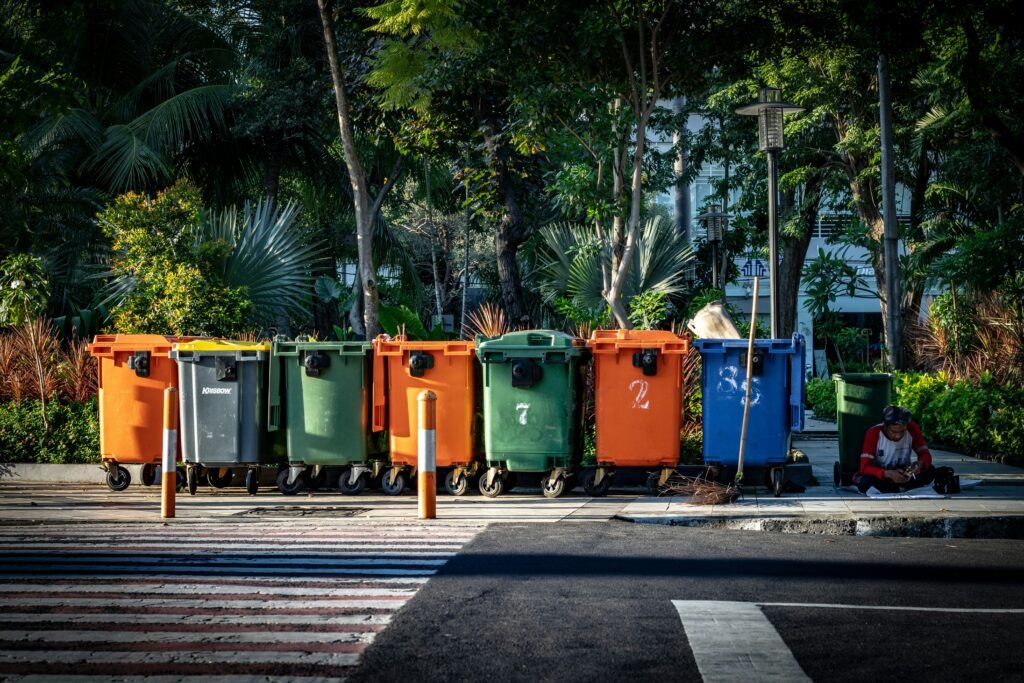
Las Vegas valet trash is a doorstep waste-collection service used by many apartment communities. Residents leave securely tied garbage bags in an approved container outside their unit, and a collection worker carries them to the property’s dumpster or compactor.
The arrangement can save residents from walking across a large complex with heavy bags. However, mandatory fees, limited collection hours, bag restrictions and missed pickups can make the service less convenient than expected. Renters should understand the complete policy before signing a lease or deciding whether an apartment fits their budget and daily routine.
How Las Vegas Valet Trash Works
Valet trash is separate from the regular waste service provided for the apartment property. Instead of carrying household garbage directly to a community dumpster, residents place it outside their doors during a scheduled evening window.
The apartment community typically provides a designated container. Garbage must remain inside that container until a collection worker removes it. After pickup, residents are expected to bring the empty container indoors by a stated deadline.
Service may be available only five nights per week. Certain weekends, holidays or severe-weather periods may not include collection. Each property can use a different schedule, so renters should not rely on the rules from a previous apartment.
The written policy should explain:
- Approved placement hours
- Collection nights
- Container requirements
- Bag and weight limits
- Prohibited materials
- Procedures for missed pickups
- Fines for violating the rules
Residents should request this information directly rather than relying on a short explanation given during an apartment tour.
Why the Service May Be Mandatory
Some apartment communities treat Las Vegas valet trash as a required amenity. Tenants must pay for it regardless of how frequently they use it or whether they would rather take their garbage to the dumpster.
The charge may appear separately on the monthly statement or be included in a resident-benefits package. Either arrangement increases the actual cost of renting the apartment.
A $30 monthly fee adds $360 over a 12-month lease. When combined with parking, internet, utility administration and other compulsory charges, the final monthly payment can be noticeably higher than the advertised rent.
Renters should ask whether the fee is optional, whether taxes are added and whether management can increase it during the lease. The answers should be confirmed in the lease or a signed addendum.
Other apartment-related charges can be equally easy to overlook. Residents buying into a managed community may also benefit from understanding how administrative problems can develop, as explained in our guide to Las Vegas HOA autopay and unnoticed fines.
Las Vegas Valet Trash Fees and Penalties
The standard monthly charge may not be the only expense. A resident can face additional costs for losing the container, leaving garbage outside at the wrong time or placing unacceptable items at the door.
Possible charges include:
- Monthly service fees
- Service activation charges
- Container replacement costs
- Early-placement violations
- Late container-removal fines
- Charges for loose or leaking bags
- Penalties for oversized waste
- Fees for abandoned furniture
- Administrative costs attached to violations
Ask the leasing office to identify every possible valet-trash charge in writing. If a leasing employee says that a particular rule is rarely enforced, the written agreement still matters because management practices and staff can change.
Residents should also check whether one warning is provided before a fine. Some properties may issue a notice first, while others may add the charge directly to the resident ledger.
Pickup Times and Collection Windows
Doorstep garbage cannot normally be placed outside whenever it is convenient. Most communities establish a short evening window to prevent bags from remaining in walkways throughout the day.
The worker may begin collecting at a stated time, but the route can take several hours. Residents in the last building may have their garbage collected considerably later than residents near the starting point.
Before using the service, confirm:
- The earliest permitted placement time
- When collection begins
- The deadline for bringing the container inside
- Nights when service is unavailable
- Changes during holidays
- Procedures after a missed collection
These restrictions can be difficult for residents who work evening or overnight shifts. Someone who regularly leaves home before the placement window may be paying for a service that is rarely practical to use.
Container, Bag and Weight Requirements
Valet trash workers may reject waste that does not comply with collection requirements. Bags generally need to be tied completely closed and placed inside the approved container.
Loose grocery bags, open garbage bags and waste stacked directly on the walkway may not qualify. Residents may also be prohibited from placing bags on top of an already full container.
Properties can limit the number of bags collected during each visit. Weight restrictions help prevent bags from tearing while workers carry them down stairs, through elevators or across the property.
The following materials generally require another disposal method:
- Paint and household chemicals
- Hot charcoal or ashes
- Unprotected broken glass
- Large amounts of liquid
- Construction materials
- Automotive fluids or batteries
- Electronics
- Furniture and mattresses
- Oversized cardboard
Cardboard may need to be flattened and taken to a recycling enclosure. Furniture and other bulky items may require advance scheduling or a separate disposal payment.
Residents should never leave an unacceptable item beside the valet container and assume that someone will remove it.
What to Do After a Missed Pickup
A full bag remaining outside in the morning does not always prove that the collection worker skipped the apartment. The bag may have been placed outside after the worker passed, exceeded the weight limit or contained prohibited material.
First, compare the bag with the property’s written rules. Take a time-stamped photograph showing the tied bag, approved container and placement location.
Report the problem through the resident portal, maintenance system or official management email. Include the apartment number, building number, collection date and approximate time the bag was placed outside.
Ask whether management wants the waste brought indoors or left outside for another collection attempt. Without written guidance, leaving it at the door could result in a violation even though the original pickup was missed.
For repeated collection failures, keep records of:
- Dates and approximate placement times
- Photographs of compliant containers
- Service requests submitted
- Management responses
- Notices or fines received
- Other apartments affected nearby
This information can help determine whether the problem involves one household, a particular building or the collection route itself.
Preventing Odors in the Las Vegas Heat
Household waste can begin smelling quickly during hot weather. Food residue left outside for several hours may also attract insects or leak onto the walkway.
Keep food waste indoors until close to the approved placement time. Drain liquids from containers before placing them in a garbage bag, and do not overfill the bag.
Wet or messy waste may need to be double-bagged, provided it remains within the weight restriction. Residents should also wash and dry the reusable valet container because residue can remain even after a bag has been removed.
Minerals in local tap water may leave a visible film on containers and other household surfaces. Our guide to Las Vegas hard water in a rental explains how mineral deposits can affect fixtures, appliances and routine cleaning.
If a garbage bag leaks in a common area, notify management promptly. The resident should follow the property’s instructions for cleaning or maintenance rather than leaving the spill until the next scheduled pickup.
Pest Problems Around Doorstep Garbage
Trash placed near an apartment entrance can attract ants, flies, cockroaches and other pests. The risk increases when residents put waste outside too early or collection is repeatedly missed.
To reduce pest activity:
- Use strong bags without holes
- Tie each bag securely
- Keep food waste covered
- Clean spills immediately
- Wash the reusable container
- Bring the container indoors after collection
- Report waste that remains outside overnight
Do not move or open a neighbor’s bag. It could contain glass, chemicals or other materials that are unsafe to handle.
When pest activity begins appearing inside the apartment, document the problem and submit a maintenance request. Mention any recurring waste accumulation in the surrounding hallway or breezeway that may be contributing to it.
Keeping Walkways and Exits Clear
Containers and garbage bags should not obstruct stairs, handrails, neighboring doors or accessible walking routes. Narrow breezeways can become difficult to navigate when several households place multiple bags outside simultaneously.
Residents should position the approved container close to their own doorway while leaving enough room for people to pass safely. Waste should never block an emergency exit, utility cabinet, fire-safety device or elevator entrance.
If the designated area creates an obstruction, ask management where the container should be placed. Moving it to an unauthorized location may prevent collection or lead to a violation.
Access Problems in Gated Buildings
Collection workers may need entry codes, access cards, keys or functioning elevators to reach apartments in controlled-access buildings.
A gate malfunction or elevator outage can cause an entire floor or building to be missed. When several neighboring apartments experience the same problem, residents should report the pattern to management.
The report should identify the affected building, floor and collection date. This gives management more useful information than a complaint stating only that one bag was not removed.
Residents may also ask whether an alternative collection location is available when an elevator or electronic entry system is out of service.
Disposing of Items Valet Trash Will Not Take
Valet service is intended for ordinary household garbage. It is not a substitute for proper disposal of paint, oil, batteries, electronics, furniture or construction waste.
Clark County provides information about responsible disposal, recycling and preventing illegal dumping through its official Keep Clark County Clean resource. Residents can use the government page to learn why certain household materials require special handling and where to find appropriate disposal guidance.
Apartment residents should still contact their leasing office before taking large items to a community disposal area. The property may have specific bulk-waste procedures or designated collection dates.
Leaving furniture or hazardous material beside a dumpster without authorization can create safety problems and may result in additional charges.
Valet Trash During Move-In and Move-Out
New tenants should confirm that an approved container is inside the apartment when they receive their keys. A missing or damaged container should be photographed and reported immediately.
Without a record, the resident might later be charged for losing an item that was never provided in usable condition.
During move-out, ask whether the container must remain inside the unit. Throwing it away, leaving it outside or taking it to another property may result in a replacement fee.
Regular valet collection usually does not include moving boxes, unwanted furniture or a large volume of discarded belongings. Request the bulk-disposal procedure before move-out day so these items do not delay the final inspection or create unexpected charges.
Questions to Ask Before Signing a Lease
The best time to evaluate Las Vegas valet trash is before committing to the apartment. Ask the leasing office:
- Is participation mandatory?
- What is the complete monthly cost?
- Is the fee included in the advertised rent?
- Can the amount change during the lease?
- Which nights include collection?
- What are the placement and retrieval hours?
- How many bags can be collected?
- Is there a weight limit?
- Are recycling and cardboard included?
- What happens after a missed pickup?
- Which violations result in fines?
- Is a warning issued before a charge?
- Who pays for a damaged container?
- How are bulky items handled?
Request the policy in writing. If possible, visit the property during an evening collection period. The condition of its hallways, breezeways and dumpster areas can reveal whether the program is managed effectively.
Evaluating the Cost and Convenience
Valet trash can benefit residents who live far from the dumpster, occupy an upper-floor unit or have difficulty carrying heavy bags. It can also reduce the need to walk across a large apartment property after dark.
The service may provide less value to people who already pass the dumpster when leaving home. Narrow placement windows and limited collection nights can further reduce its usefulness for residents with irregular schedules.
Compare the fee, collection schedule, enforcement practices and reliability together. A well-run service may provide meaningful convenience, while an inconsistent mandatory program may simply increase the cost of renting.
Understanding the written policy before moving in allows residents to calculate the apartment’s true monthly expense and avoid preventable charges later.
Note: Valet trash fees, collection schedules and enforcement policies vary among Las Vegas apartment communities and service providers. Clark County resources do not replace an apartment’s individual waste policy. This article provides general information and should not be treated as legal advice or as a substitute for reviewing your lease, community addendum and current property rules.