Nevada ghost towns often appear to sit in open desert with no obvious boundary around them. A road may be visible on a map, tire tracks may continue through a gate and an abandoned building may look as though nobody has visited it for decades.
None of those details proves that the public has permission to enter.
Understanding Nevada ghost town access requires separating the historic destination from the land beneath it and the roads leading to it. A ghost town can contain federal land, private parcels, active mining claims and public roads within the same small area.
Travelers should confirm the route and land status before leaving pavement rather than trying to resolve ownership after reaching a locked gate.
A Ghost Town Is Not a Type of Public Land
“Ghost town” describes the history or current condition of a settlement. It does not establish who owns the land.
A ghost town may be located on:
- Bureau of Land Management land
- U.S. Forest Service land
- State land
- County or municipal property
- Privately owned land
- An active mining property
- A combination of several ownership types
The road approaching the town may also have a different status from the buildings and surrounding parcels.
Public land nearby does not create a right to cross private property to reach it. Similarly, a road open to public travel does not give visitors permission to leave the road and enter every structure along it.
Online Maps Do Not Prove Legal Access
Navigation applications are useful for finding approximate locations, but they are not authoritative property or access records.
A map may display:
- A road that is no longer maintained
- A private ranch road
- A route blocked by mining operations
- An old road that no longer exists on the ground
- A road crossing private property
- A trail unsuitable for ordinary vehicles
- A seasonal route damaged by weather
- A road with restricted access
Satellite images can also be outdated. An open route visible in the image may now have a gate, washout or active construction.
Use navigation applications as one source, not as proof that a route is public. Compare them with current land-management maps and information from the responsible agency or county.
Identify the Land Manager
Before visiting, determine which agency or owner manages the destination.
For federal land, the appropriate Bureau of Land Management field office or Forest Service unit may be able to explain current closures, road conditions and restrictions. State parks and historic sites may have their own operating hours and access rules.
If the site is on private property, obtain the owner’s permission before entering. A social-media post showing other visitors inside does not substitute for permission.
The land manager may also change along the route. A traveler could begin on a county road, pass through federal land and reach privately owned ruins at the destination.
Save relevant maps offline because cellular service may disappear before the ownership boundaries become important.
A Visible Road Can Still Be Private
The physical appearance of a road says little about its legal status.
A wide, graded road might be maintained privately for ranching or mining. A narrow and poorly maintained route could still be open for public use. Tire tracks prove only that vehicles have traveled there—not that every driver had permission.
Road signs, gates, agency maps and county records provide better evidence than appearance.
When status remains unclear, contact the land manager or county road department before traveling. Do not assume that the absence of a “Private Road” sign establishes a public right of access.
An Open Gate Is Not an Invitation
Nevada backroads frequently pass through fences used to control livestock. Some gates may be part of a public route, while others protect private roads or restricted areas.
An open gate does not automatically grant access. It may have been left open temporarily for workers, ranchers or emergency vehicles.
Before proceeding, look for:
- No-trespassing signs
- Private-property notices
- Agency route markers
- Seasonal-closure signs
- Active mining warnings
- Instructions posted at the gate
- Locked chains or barriers
Never drive around a locked gate, cut a lock or move a barrier. Tire tracks bypassing a gate do not make the detour legal.
When traveling through an authorized gate, leave it as found unless posted instructions say otherwise. Closing a gate that was intentionally open can create problems just as leaving a closed livestock gate open can.
Travel Nevada’s responsible recreation guidance similarly advises visitors to respect no-trespassing signs and leave gates in their existing position.
Private Buildings May Look Abandoned
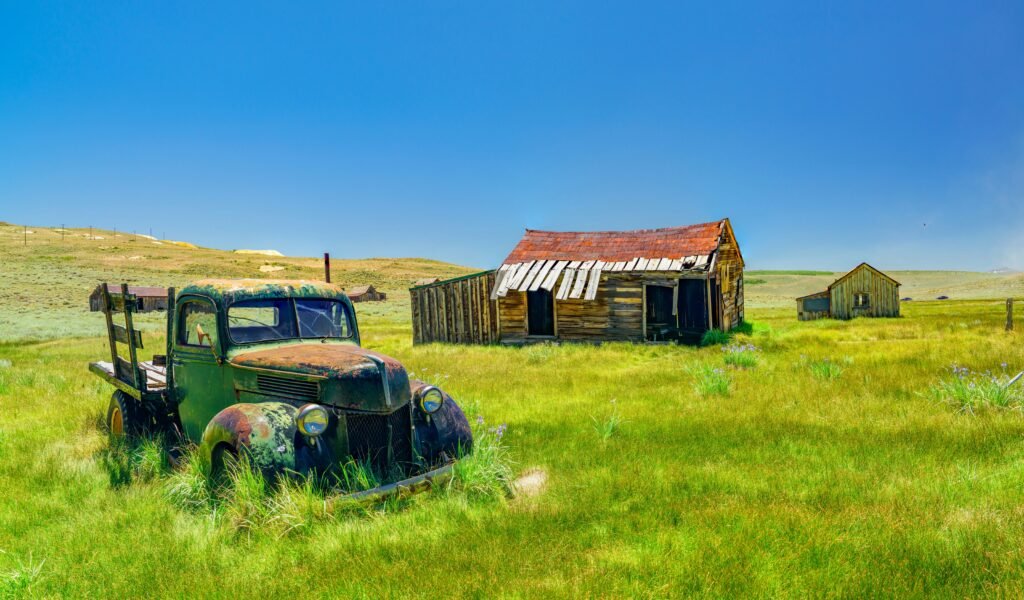
A collapsed roof, missing windows and decades of weathering do not eliminate ownership rights. A building can be privately owned even if it appears unused.
Do not enter, climb on or remove anything from a structure without clear permission. Apart from trespassing concerns, abandoned buildings can contain:
- Unstable floors
- Collapsing roofs
- Exposed nails
- Broken glass
- Hazardous dust
- Animal nests
- Open shafts or cellars
- Unprotected wells
Photograph private structures from a lawful public location. Avoid aiming cameras into occupied homes or treating nearby residents as part of the attraction.
Some communities described online as ghost towns still have year-round residents. Travel Nevada’s ghost town primer warns visitors not to assume that an unoccupied-looking building is publicly accessible.
Public Land Does Not Mean Unrestricted Use
Land managed for public use remains subject to rules. Vehicle travel may be limited to designated or existing routes, and some areas may close seasonally or temporarily.
Restrictions can protect:
- Wildlife habitat
- Cultural sites
- Sensitive soil
- Restoration work
- Fire-damaged areas
- Public safety
- Active operations
- Wilderness character
Motorized vehicles are generally prohibited in designated wilderness. A road-like line continuing into a wilderness area should not be treated as a legal motorized route without confirmation.
Camping, fires, target shooting, collecting and drone use may each have separate restrictions. Verify the rules for the specific parcel rather than applying a general idea of what is permitted on public land.
Mining Claims Add Another Layer
Many Nevada ghost towns developed around mining districts. Historic ruins may now sit near active mines, exploration areas or unpatented mining claims.
An unpatented mining claim does not necessarily convert all surrounding federal land into private property. However, claim holders may have protected rights to conduct mining activities, use equipment and prevent interference with their operations.
Visitors should never:
- Enter active workings
- Handle equipment
- Disturb claim markers
- Collect material from an active claim
- Block an access road
- Enter fenced processing areas
- Approach blasting operations
- Ignore mine-safety signs
Patented mining claims may be privately owned land. The word “claim” therefore does not provide enough information by itself. Confirm ownership and access with authoritative records or the managing agency.
Never Enter an Abandoned Mine
A mine opening is not a safe historic attraction unless it has been specifically developed and approved for public access.
Abandoned mines may contain:
- Unstable rock
- Hidden vertical shafts
- Bad air
- Toxic gases
- Deep water
- Unstable ladders
- Explosives
- Wildlife
- Unsupported tunnels
Barriers and warning signs should never be crossed. Do not throw rocks into shafts, since people or wildlife could be below and the impact may destabilize material.
Keep children and pets close. An opening can be difficult to see among brush, debris or shadows.
A photograph from a safe distance is not worth approaching unstable ground around a shaft or adit.
Artifacts Must Remain Where They Are
Bottles, cans, tools, nails, ceramics and pieces of equipment contribute to the historical context of a site. Removing them gradually destroys the location visitors came to experience.
Do not take an object because it appears common, broken or recently moved. Its age and legal protection may not be obvious.
Travel Nevada advises visitors that removing artifacts from ghost towns, state parks and other historic sites is illegal. The safest practice is to take photographs and leave every object where it was found.
Metal detecting, digging and rock collecting can also be restricted according to land status and the material involved. Confirm the applicable rules before bringing collection equipment.
County Roads Need Local Confirmation
A route may be described online as a county road even when its maintenance level is minimal. County recognition does not guarantee that the surface is suitable for a passenger car or recently graded.
Ask the relevant county road department:
- Whether the route is publicly maintained
- Where county maintenance ends
- Whether closures are in effect
- Whether storms damaged the road
- Whether winter access is practical
- Whether a bridge or crossing is usable
- Whether an alternate public route exists
A county may confirm road status without guaranteeing safe passage. The driver remains responsible for using a suitable vehicle and responding to actual conditions.
Old maps using a road number or historic name may no longer reflect the county’s current designation.
Property Maps Have Limitations
Parcel viewers can help identify possible private property, but boundary lines displayed online may be approximate. GPS accuracy can also decline in canyons or remote terrain.
Do not use a phone screen to decide that a fence, building or mining feature lies a few feet inside public land. If access depends on a precise boundary, obtain reliable information before the trip.
Land-ownership layers may also omit:
- Easements
- Temporary closures
- Road restrictions
- Recent property transfers
- Rights associated with mining claims
- Special-use permits
The fact that a map colors an area as federal land does not resolve every access question.
Ask Permission Clearly
When access requires private property, contact the owner before arriving. Explain:
- Who wants to visit
- The requested date
- The intended route
- The number of vehicles
- Whether photographs will be taken
- How long the visit will last
- Whether pets are involved
Permission to cross the property does not necessarily include entering structures, camping or collecting items. Ask about each intended activity.
Respect a refusal without attempting to negotiate at the gate. Owners may have concerns involving livestock, liability, fire danger, vandalism or active work.
Keep a written record of permission when possible and follow any conditions the owner provides.
Do Not Follow Another Vehicle Through
A ranch vehicle, mining truck or local resident may unlock a gate and continue through. That action does not authorize visitors to follow.
The driver may have a key, lease, employment-related access or personal permission unavailable to the public.
Wait outside the restricted area and verify access independently. Following closely behind can also create a safety problem if the authorized driver closes or locks the gate after passing.
The same rule applies to convoys and social-media meetup groups. Another participant’s confidence does not establish that the organizer obtained permission.
Prepare for Road Conditions
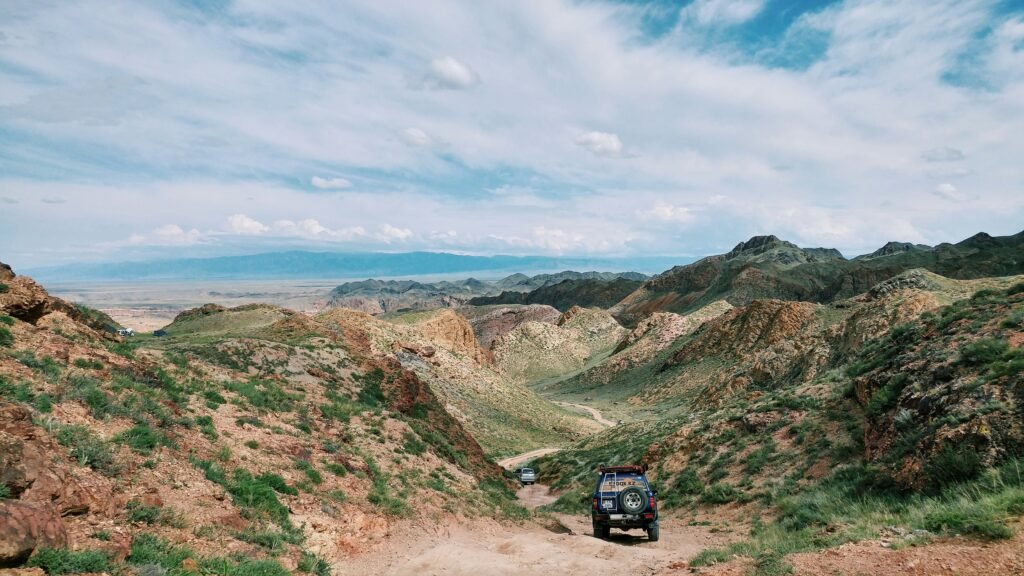
Legal access does not mean easy access. Ghost-town roads may include deep sand, sharp rock, washouts, mud, steep grades or narrow turnarounds.
Before leaving pavement:
- Confirm the vehicle suits the route.
- Check the spare tire.
- Carry adequate fuel and water.
- Download maps.
- Tell someone the destination and return time.
- Check the weather.
- Avoid traveling alone when conditions are uncertain.
- Know whether the route has space to turn around.
Do not continue merely because the destination is close on the map. The final mile can be the most difficult part of the trip.
If the road becomes worse than expected, turn around while doing so remains possible.
Rain Can Change Access Quickly
Nevada desert roads can become impassable after rain. Dry washes may flood, while clay-rich surfaces can turn into deep mud.
A road that was usable during the drive in may not remain usable after a storm. Check the forecast for the complete drainage area, not only the ghost town itself.
Never drive through flowing water when its depth, speed or road condition cannot be confirmed. A washed-out road may be hidden beneath muddy water.
Wet-road damage can also lead land managers to impose temporary closures. Respect those closures even if another vehicle has already driven through.
Parking Can Create Trespass Problems
A road may be public while the shoulder or open area beside it is private. Do not assume that any flat area is available for parking.
Park without:
- Blocking gates
- Obstructing mine or ranch traffic
- Driving over vegetation
- Entering a private turnout
- Preventing emergency access
- Occupying the traveled roadway
If no lawful parking area is available, the site may not be practically accessible from that approach.
Avoid parking near old structures that could collapse or within areas where nails, glass and metal debris could damage tires.
Drone Access Is a Separate Question
Standing on public land does not automatically permit every drone flight. Airspace restrictions, temporary flight restrictions, privacy concerns and land-manager rules may apply.
Ghost towns near military installations, airports, active emergency operations or sensitive sites require particular caution.
Confirm current Federal Aviation Administration requirements and land-manager restrictions before launching. Do not fly over private homes, active mining operations or people without understanding the applicable rules.
The ability to fly from a lawful launch point does not provide permission to enter private land to recover a crashed aircraft.
What to Do When the Route Becomes Unclear
Stop before crossing the questionable boundary.
Look for signs, route markers and the gate’s construction. Compare offline maps, but do not treat one application as definitive.
If status cannot be confirmed:
- Turn around.
- Contact the land manager.
- Ask the county road department.
- Request permission from the owner.
- Use a verified alternate route.
- Choose another destination.
Do not move signs, open locks or create a new route around the obstruction. Returning another day with accurate information is better than risking trespass, vehicle damage or a confrontation.
A Responsible Nevada Ghost Town Visit
Before visiting, confirm the destination’s land manager, the status of the access road and any current closures. Identify where public access ends and whether buildings or mine features are privately owned.
At the site, remain on authorized routes, respect every sign and leave gates as found. Do not enter structures or mines, and never remove artifacts.
Nevada ghost town access is often more complicated than the map suggests. Travelers who resolve ownership and road questions before departure are better prepared to explore these historic places without damaging them or violating the rights of the people who own and manage the land.
Note: This article provides general travel information and is not legal or land-survey advice. Ownership, road status and access restrictions can change. Confirm current conditions with the responsible land manager, county or property owner before visiting.