
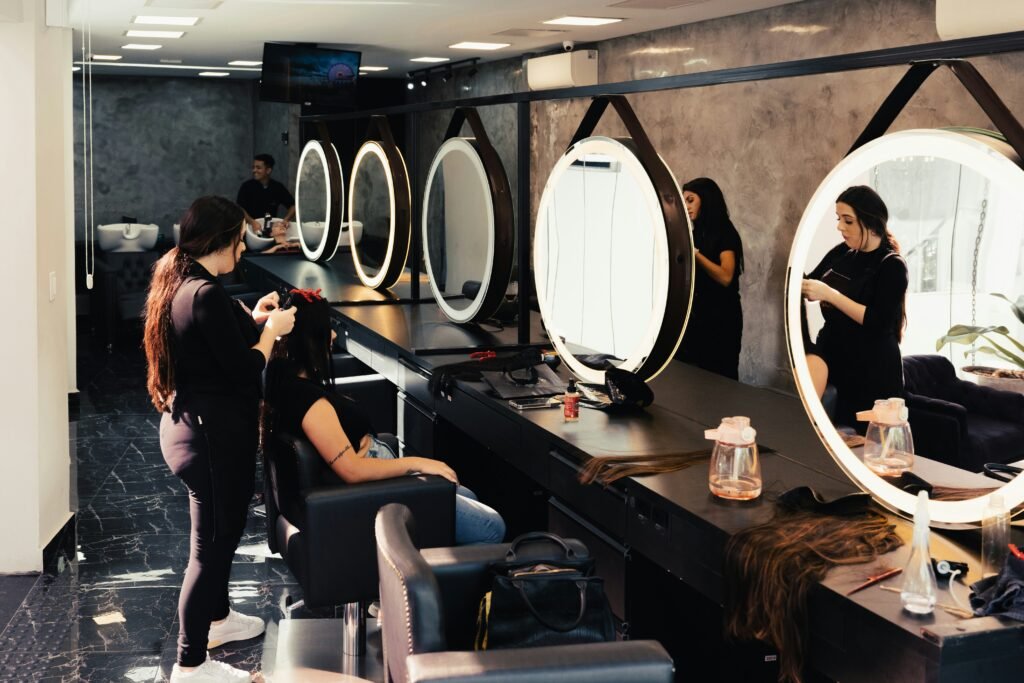
A Las Vegas salon booth rental can give a hairstylist more control over pricing, appointments and the client experience. It also shifts business expenses onto the person behind the chair. Keeping the full service payment means paying for the space, supplies and administration that support each appointment.
Before leaving a commission-based position or signing a rental agreement, work out what the arrangement would leave you after expenses. The useful comparison is the income you can realistically keep, the hours required to earn it and the financial commitments that continue when bookings are quiet.
Identify What the Booth Rental Actually Includes
A chair in an open salon, a shared station available on selected days and a private salon suite can involve different costs and responsibilities. Compare the actual facilities and access offered by each agreement.
Ask whether rent includes a styling chair, mirror, shampoo station, storage, towels, laundry, reception, internet and cleaning. Check whether supplies described as included are limited to basic backbar products or extend to the color and treatment products you use.
Confirm access hours and whether the station is exclusively yours. A lower price may have limited value if you cannot offer the evening appointments your clients need or must remove your equipment after every shift.
Check Nevada Professional and Business Licensing
Nevada’s salon rules and regulations recognize appropriately licensed or registered professionals working as lessees of salon space. Renting a station does not replace the credential required for the services you perform.
Verify your professional license and the establishment’s license before committing. If the proposal involves operating a separate suite or establishment, ask the Nevada State Board of Cosmetology which approvals apply to that layout and business arrangement. Do not assume another renter’s setup determines your requirements.
Business licensing is a separate check. The state’s licensing and permits directory explains how to identify state and local requirements.
A Las Vegas mailing address does not establish that the salon is within city licensing jurisdiction. The City of Las Vegas application guide directs applicants to verify the address first. The appropriate authority could instead be Clark County, North Las Vegas or Henderson. Ask that office which license category applies to your individual business.
Confirm How Independent the Arrangement Will Be
Discuss who sets service prices, chooses products, manages bookings, collects payments and handles refunds. Find out whether the salon expects mandatory shifts, participation in discounts or duties unrelated to your own clients.
These details affect both your business plan and the legal relationship. For federal employment-tax purposes, the IRS evaluates control and independence, including behavioral control, financial control and the nature of the relationship.
A booth-rental label alone does not settle worker classification. If the written agreement describes independence but the working rules suggest otherwise, have the arrangement reviewed. State employment-law requirements may involve a separate analysis.
Convert Weekly Rent Into a Full-Year Budget
Weekly rent is easy to underestimate when comparing it with monthly household bills. Multiplying by four leaves out part of the year.
For illustration, rent of $300 per week would equal $15,600 over 52 charged weeks, averaging $1,300 per month. These are hypothetical figures, not a quoted Las Vegas rental rate. Use the agreement’s actual billing schedule and account for months with extra payment dates.
Ask whether rent continues during vacations, illness or a salon closure. Read any introductory discount alongside the standard rate and scheduled increases.
Add required recurring charges, such as laundry, access fees or mandatory software. A written breakdown makes it easier to compare offers with different included services.
Separate Opening Costs From Ongoing Expenses
Before the first appointment, you may need a deposit, prepaid rent, tools, a starting product inventory, a payment terminal and initial licensing or insurance payments. Some items are purchases; others are money tied up temporarily. A refundable deposit still reduces the cash available for opening.
Build the startup budget around the services you already know you will provide. Buying a large color range or extensive retail stock can leave money sitting on shelves while rent becomes due.
Keep a separate operating reserve. Estimate the shortfall between expected receipts and unavoidable payments during a slow opening period, then consider a longer delay as well. The appropriate reserve depends on your existing bookings, personal obligations and rental commitment.
Work Out the Cost of Each Service
Service revenue has to cover more than the time spent cutting or coloring hair. Estimate product use, disposable items, laundry charges where applicable and payment-processing fees for each main service.
A long color appointment may have a higher ticket price while using considerably more product and chair time. Include consultation, preparation, cleanup and any gaps during which the station cannot generate another booking.
Use your usual service mix to estimate an average amount remaining from each completed appointment after its direct costs. Base this on the price clients actually pay after discounts and refunds. Treat tips cautiously in a minimum-income forecast.
This calculation also helps identify services that need revised pricing, tighter product control or more realistic appointment lengths.
Calculate the Bookings Needed to Cover Costs and Pay Yourself
Consider a hypothetical business with the $1,300 average monthly rent described above and another $350 in fixed operating costs. Its total fixed cost would be $1,650 per month.
Suppose the average completed appointment produces $100 in collected service revenue and uses $20 in products and payment fees. That leaves $80 toward fixed costs and the owner’s income.
The stylist would need 21 completed appointments to cover $1,650 in fixed costs. To cover those costs and produce at least $3,000 in owner income before personal taxes, the requirement rises to 59 completed appointments. At that level, the example leaves $3,070 after the stated business expenses.
The figures exclude startup spending and assume the stated service mix and costs. Replace them with your own numbers, then test a lower average ticket or more expensive product mix. Count completed, paid appointments rather than calendar reservations, and check whether their total service hours fit your schedule.
Assess the Client Base You Can Realistically Bring
Build the initial forecast from clients likely to book at the new location and their normal return intervals. Someone who visits every eight weeks should not be counted as a monthly appointment.
Consider whether the location, parking, opening hours and new prices will suit those clients. If the salon promises walk-ins or referrals, ask how they are allocated and whether additional charges apply. Avoid budgeting around an unverified promise of a busy location.
Before contacting clients from your current workplace, review your employment agreement and any confidentiality or solicitation provisions. Confirm your rights to use contact details, photographs and service records. Obtain legal advice where those rights are unclear.
Control Booking Records and Payment Access
Establish who owns the booking account, business phone number and customer records created during the rental. If you use a shared system, ask what information you can lawfully export when you leave and how client privacy is protected.
Confirm where card payments are deposited and when you receive them. If the salon processes transactions for you, request a clear statement showing service charges, tips, refunds, fees and deductions.
Read the rules for prepaid packages and gift cards. Know who received the original money and who must provide or refund the service if the rental ends. These obligations can otherwise follow a stylist out of the salon without matching funds.
Plan for Federal Taxes and Product Sales
The IRS self-employed individuals tax center explains that self-employed workers generally owe federal income tax and self-employment tax. Estimated payments may also be required.
Keep records of income, tips, expenses and supporting receipts from the start. Use separate business banking and bookkeeping records to make reconciliation easier, and calculate tax reserves using your circumstances rather than a universal percentage.
Ask an accountant how to handle startup purchases, equipment, rental payments and your chosen business structure. A cash payment does not always have the same timing or treatment as a tax deduction.
Selling take-home shampoo, styling products or accessories adds a retail activity. Check the Nevada Department of Taxation’s business guidance for sales-tax registration and reporting requirements before making sales. Identify who is the seller of record if products belong to the salon, and keep retail transactions distinguishable from service receipts.
Budget for Insurance and Time Away From the Chair
Ask an insurer familiar with beauty businesses about professional liability, general liability and protection for your equipment and stock. Describe your actual treatments and rental arrangement so the quote reflects the work you intend to perform.
Check the rental agreement for insurance requirements and ask whether the salon’s policy provides any coverage for your business. Obtain confirmation instead of relying on a verbal assurance that everyone in the building is covered.
Include the personal costs of leaving employment in your income target. Health coverage, retirement contributions and time off may require separate funding. Consider how you would meet business and household bills if illness prevented you from taking appointments.
Inspect the Workspace During a Working Day
Tour the salon while services are underway. Check shampoo-bowl availability, hot water, lighting, electrical access, storage and the practicality of cleaning your tools and station between clients.
In Las Vegas, ask about air-conditioning availability during all permitted working hours, including evenings and weekends. Confirm who handles outages or repairs and whether any disruption affects your payment obligations.
Evaluate the customer experience as well: parking, directions, entry access, waiting space and accessibility. A workspace that slows appointments or makes repeat visits inconvenient can affect the number of clients you can serve profitably.
Review the Exit Terms Before Signing
Read the minimum term, renewal process, notice deadline and deposit-return conditions. Check whether leaving early makes future rent payable, whether a personal guarantee is involved and whether replacing yourself with another renter requires approval.
Ask what happens if the salon relocates, changes ownership, closes or loses the ability to provide the promised workspace. Record the agreed process for retrieving equipment, settling outstanding payments and communicating with your clients.
A Nevada attorney can review unclear rental or client-restriction terms, while an accountant can test the income forecast. Resolve those issues before paying a deposit or giving notice at your current salon.
Note: This article provides general business information, not legal, tax or insurance advice. The financial examples are illustrative and are not current Las Vegas market quotes. Verify licensing requirements, coverage and agreement terms for your specific business before committing.