
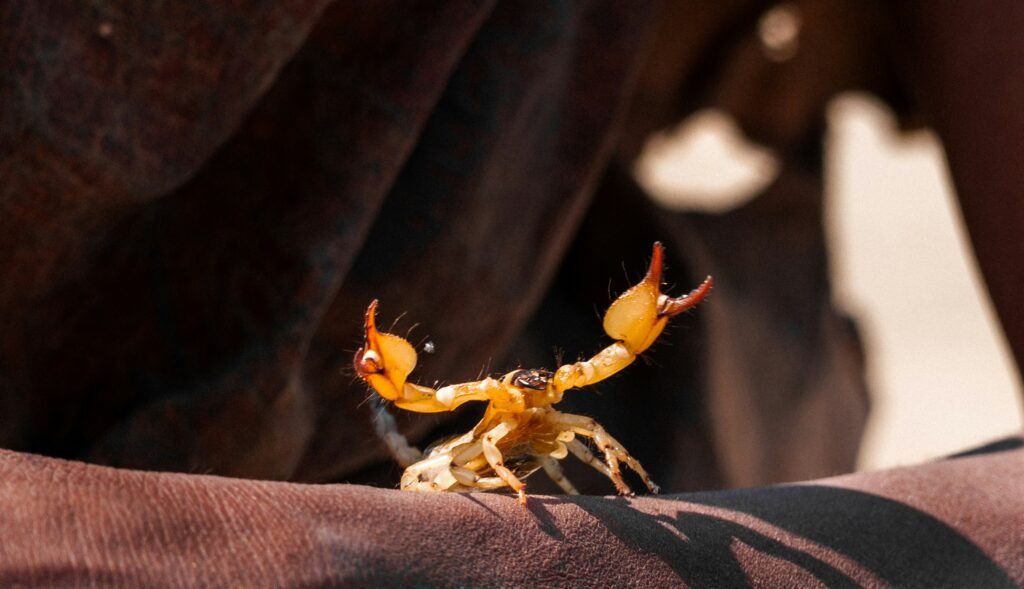
Finding a scorpion inside your apartment can be frightening, particularly if you are new to Southern Nevada. Your first instinct might be to search every corner of the unit or ask management to spray immediately. A more useful approach is to handle the immediate risk, record where the scorpion appeared and find out whether there is an entry point that needs repair.
Las Vegas apartment scorpions are not exclusively a ground-floor problem. A sighting in an upstairs unit is possible, and one scorpion does not automatically mean there are more. What matters is how you respond to the first sighting and whether the problem continues.
What Should You Do Immediately?
Keep children and pets away from the scorpion. Do not touch it, step near it with bare feet or reach behind furniture where it may have moved.
If you can photograph it safely, take a clear picture without getting close. Note the date, approximate time and exact location, such as “next to the patio door” or “inside the bathroom.” This information is more useful to maintenance than simply reporting that you found a scorpion somewhere in the apartment.
If it is still visible, contact your apartment’s maintenance team for instructions. Do not handle a live scorpion just to identify it. If it disappears, avoid moving objects with your bare hands while looking for it. Put on closed-toe shoes and check the immediate area carefully.
A nighttime discovery does not necessarily require searching the whole home before bed. Focus on the room where it was seen, items on the floor and places where someone might accidentally make contact.
Report the Sighting to Apartment Management
Call the maintenance or emergency line if the situation requires an immediate response. Then submit a written maintenance request so there is a record of the sighting.
Include the photograph if you have one, the location, whether anyone was stung and whether you have seen scorpions before. Ask management to inspect for possible entry points and explain what pest-control response is available.
A specific request might say:
I found a scorpion beside the patio door in my apartment on September 14 at approximately 9 p.m. I’ve attached a photograph. Please inspect the door seal and nearby openings, and let me know whether pest control will visit.
The location matters. It gives maintenance a starting point and makes it easier to determine whether a door, window or other building component needs attention.
Where Could a Scorpion Be Getting In?
You may not be able to identify the route from a single sighting. Scorpions can enter through openings around doors, damaged weatherstripping, gaps near utility penetrations or other small openings. One could also be carried inside with belongings.
Look only at areas you can inspect safely. Check whether an exterior door closes tightly, whether you can see light beneath it and whether there are visible gaps around nearby fixtures. Photograph anything that appears damaged.
Tell maintenance what you observed, but avoid making permanent changes to the apartment without approval. A door sweep or building seal may need a proper repair rather than a temporary fix that interferes with the door.
Do not assume that an upper-floor apartment has no possible access points. Balconies, exterior walls and items brought into the unit should all be considered during an inspection.
Does One Scorpion Mean You Have an Infestation?
No. A single scorpion may be an isolated sighting. It does, however, justify documenting the incident and checking for an obvious access problem.
Repeated sightings change the situation. If another scorpion appears, record where and when you found it. A pattern—such as multiple sightings near the same patio door—is useful evidence for determining where to inspect.
Ask management whether pest control should evaluate the building exterior or nearby shared areas, not only the inside of your apartment. Treating one room may have limited value if an opening remains unaddressed.
Avoid assuming that every small creature you find is a scorpion. A photograph can help a qualified pest-control professional identify it without requiring you to handle it.
What Can You Do While Waiting for an Inspection?
You can reduce the chance of accidental contact without turning your home upside down. Wear shoes indoors for the time being, especially at night. Check shoes and clothing before putting them on if they have been left on the floor.
Keep bedding from hanging onto the floor and move loose items away from the area where the scorpion appeared. A clearer floor makes it easier to spot another one and gives an inspector access to baseboards and doorways.
These measures help protect you while the sighting is investigated. They are not a replacement for repairing a damaged seal or evaluating repeated activity.
Be cautious about applying your own pesticide. Read your lease and ask whether the building has a coordinated pest-control plan. Using a product improperly can create risks for people and pets without solving an entry-point problem.
What Happens During a Pest-Control Visit?
An effective visit should involve more than a quick spray. The technician may inspect the location of the sighting, look for entry points and recommend repairs or follow-up treatment.
Ask what was found and what happens next:
- Was a likely entry point identified?
- Does maintenance need to repair a seal or opening?
- What areas were treated?
- Are there instructions for children or pets?
- When should you report another sighting?
- Is a follow-up inspection recommended?
Request a copy of the service report if one is available. If the technician recommends a repair, submit or update the maintenance request so that recommendation reaches the people responsible for the building.
No treatment should be presented as a guarantee that a scorpion can never enter again. The useful question is whether management has investigated the conditions that made the sighting possible.
What If You or Someone Else Is Stung?
A sting is a medical concern. Do not rely on an online photograph or a neighbor’s experience to judge how serious it is.
Call Poison Help at 1-800-222-1222 for guidance. Tell the specialist the person’s age, symptoms and when the sting occurred. Seek emergency help by calling 911 if the person has trouble breathing, collapses, loses consciousness or has a seizure.
Take a photograph of the scorpion only if you can do so safely. Do not delay getting help to capture or identify it. After addressing the person’s health needs, notify apartment management and document where the sting happened.
Is Pest Control the Landlord’s Responsibility?
The answer depends on the condition of the rental, the lease and the circumstances. Nevada’s landlord–tenant law requires landlords to maintain dwelling units in a habitable condition. But one scorpion sighting does not automatically establish that a landlord has violated the law or that a tenant can break the lease.
Report the issue promptly and give management the information needed to investigate. Keep copies of your requests, photographs, replies, inspection reports and records of further sightings.
If scorpions continue to appear and the issue remains unresolved, seek Nevada-specific tenant guidance before taking steps such as withholding rent, paying for a treatment yourself and deducting its cost, or moving out. Those actions can have legal consequences if the required procedures are not followed.
How to Track a Recurring Problem
If there is another sighting, maintain a short log. Record the date, time, room and location within the room. Note whether the scorpion was photographed and whether maintenance was notified.
The log helps answer practical questions: Is the activity concentrated near one exterior door? Did sightings continue after a repair? Did the technician inspect the area where the scorpions actually appeared?
You do not need a complicated spreadsheet. A dated note and copies of maintenance requests are enough to establish a clear timeline.
A Sensible Response to the First Sighting
The first scorpion you find in a Las Vegas apartment deserves attention, but it does not require you to assume the worst. Keep people and pets away, document the location and notify management in writing. Ask for an inspection that considers both pest activity and possible access points.
If there are further sightings, your records will help management investigate the pattern. If there are none, you will still have taken reasonable steps to make the apartment safer without treating one incident as proof of a larger problem.
Note: This article provides general information, not medical or legal advice. Contact Poison Help or emergency services when appropriate, and seek advice specific to your lease and circumstances if a rental dispute develops.